
When the Grass Changes, the Math Changes
Forage supply changes throughout the year. Keeping livestock demand in step with those changes can give you more options when conditions shift.
A pasture that can comfortably support a herd in May may tell a different story by August.
Rainfall may slow. Temperatures may climb. Forage growth can taper off sooner than expected. Even in a good year, the amount and quality of available forage can change as the growing season progresses, affecting both how much cattle have to graze and how well they can use it.
That makes matching herd size to the land an ongoing management decision.
“Just like any business, ranchers deal in supply and demand,” says Caitlin Word, Noble Research Institute education, partnership and outreach specialist. “When we are discussing carrying capacity, that’s really a measurement of forage supply, how many animals we can support with the forage available on the land.”
Producers manage the demand side through the number and type of livestock they stock and the amount of forage those animals consume. Other factors, including wildlife, insects, drought and extreme weather, can also affect available forage.
Understanding both sides of the equation can help you set a stocking rate that leaves room to respond when conditions change.
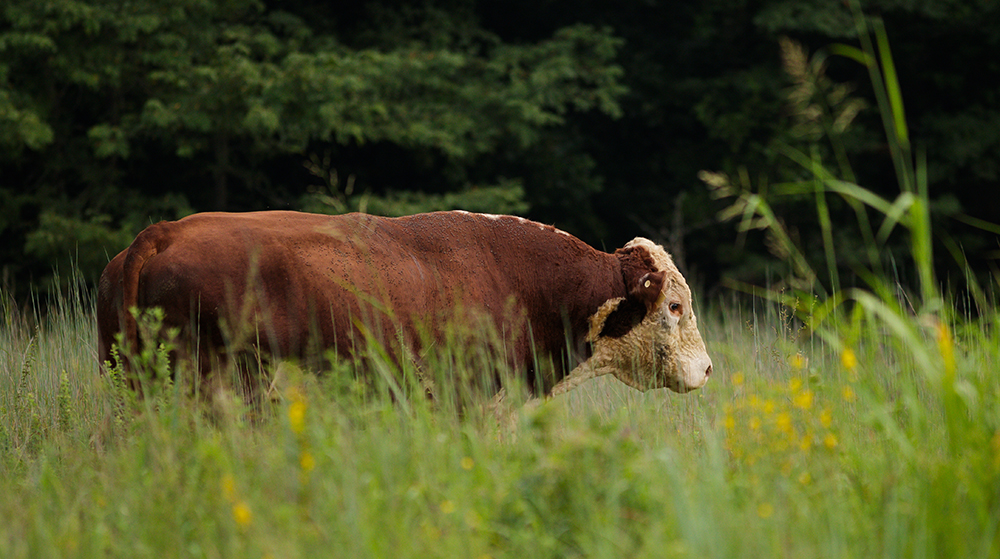
Carrying capacity can change with the season
Knowing your land’s carrying capacity provides a starting point, but forage production can vary throughout the year and from one year to the next.
Precipitation is one of the biggest variables, including how much rain falls, when it falls and how much enters the soil rather than running off. Temperature also matters. A cool spring can delay warm-season forage growth, while an early stretch of hot, dry weather can cut production short. Over time, brush encroachment and invasive species can reduce grazeable acres.
“Good managers keep a pulse on this all year round,” Word says. “Forage production is largely determined by precipitation, not just how much we get, but when we get it.”
One approach is to identify the point when most annual forage production typically has occurred in your area and use it as a check date.
That assessment can give producers a clearer picture of what they have available for the remainder of the year.
Know what you have
Making informed stocking decisions starts with understanding your land’s carrying capacity, including how available forage changes throughout the season.
A grazing stick or even a yardstick can be a practical tool for estimating forage production. Regularly measuring forage can also help producers calibrate their eye and become better at estimating what is available over time.
Pair that estimate with livestock demand. Calculating residual herd days or animal unit days can help determine how many days of grazing remain based on your forage supply and the animals currently stocked. If livestock demand begins to exceed the forage available for the remainder of the grazing period, consider what needs to change.
For producers who want hands-on practice with these calculations, Noble Grazing Essentials covers carrying capacity, stocking rates and other grazing management fundamentals.
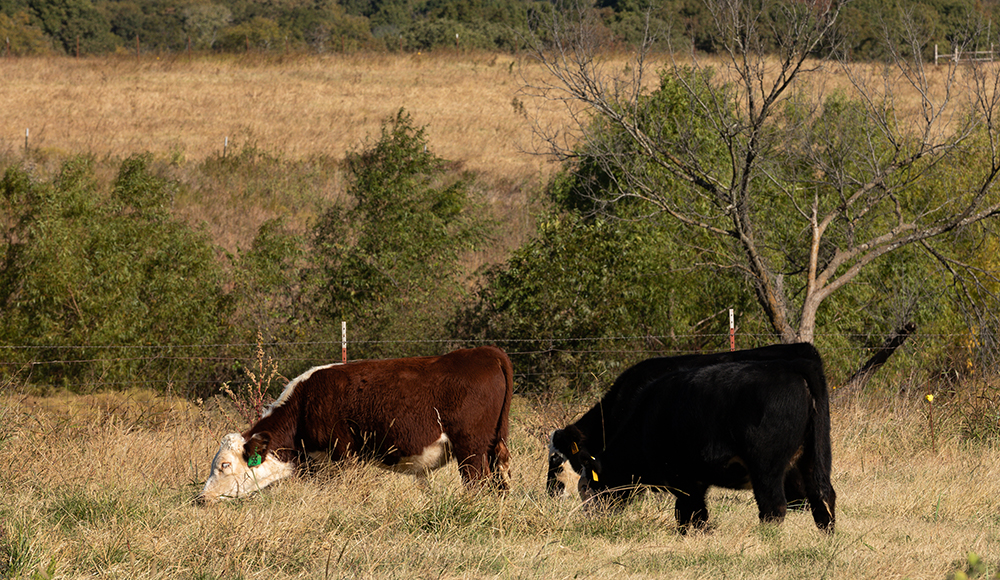
Watch the cattle and the grass
The numbers are important, but some of your best indicators are already in the pasture.
“Watching your livestock would be the most telling,” Word says. “Animal contentment, gut fill and manure scores are all leading indicators.”
Look ahead of the herd, too. Is there enough standing forage to meet animal needs until additional forage growth occurs? Are cattle moving through planned grazing areas faster than expected? Are previously grazed pastures recovering in time for the next planned grazing event?
Residue can offer another clue. If cattle are grazing harder than planned and leaving less plant material behind, it may be time to reevaluate animal numbers.
During periods of rapid forage growth, producers should also pay attention to how quickly cattle are moving through pastures.
“When forage growth is fast, move fast. As forage growth slows down, move slower,” Word says.
Leaving cattle in one area too long during rapid growth can allow them to return to fresh regrowth before plants have adequately recovered. More frequent moves can help keep grazing in step with forage growth. As growth slows, grazing moves can slow as well.
Make the decision before conditions force it
Drought can make stocking decisions urgent. Setting decision points ahead of time can give you more options.
A grazing plan provides a baseline. If cattle consistently need to move faster than planned, forage may be disappearing more quickly than expected. Slow pasture recovery can send a similar signal. A predetermined check date can also prompt you to calculate remaining forage and compare it with expected livestock demand.
“Having a solid plan in place before this happens keeps you from having to make rushed decisions in the moment,” Word says.
Waiting can have financial consequences. If drought forces many producers in an area to sell cattle at the same time, more cattle entering the market can affect the opportunities available. Recognizing a forage shortage earlier gives you more flexibility to decide which animals to market and when.
Producers can also build flexibility into the herd before forage gets tight. One approach Word suggests is stocking a core cow-calf herd below total carrying capacity and using some of the remaining capacity for stockers or custom-grazed cattle. Those animals can be marketed more quickly if forage conditions deteriorate without immediately reducing a cow herd that may have taken years to build.
She also notes that stocking at 70% to 80% of estimated carrying capacity can provide more room to respond than stocking at full capacity. The right percentage depends on the operation and the producer’s tolerance for risk.
Feeding may also be an option when forage becomes limited. Supplementation provides nutrients, such as protein or energy, that standing forage lacks. Substitution feeding replaces forage altogether, such as feeding hay when there is no longer enough standing grass.
“You need to be able to do the math and make that decision every time you encounter the issue,” Word says.
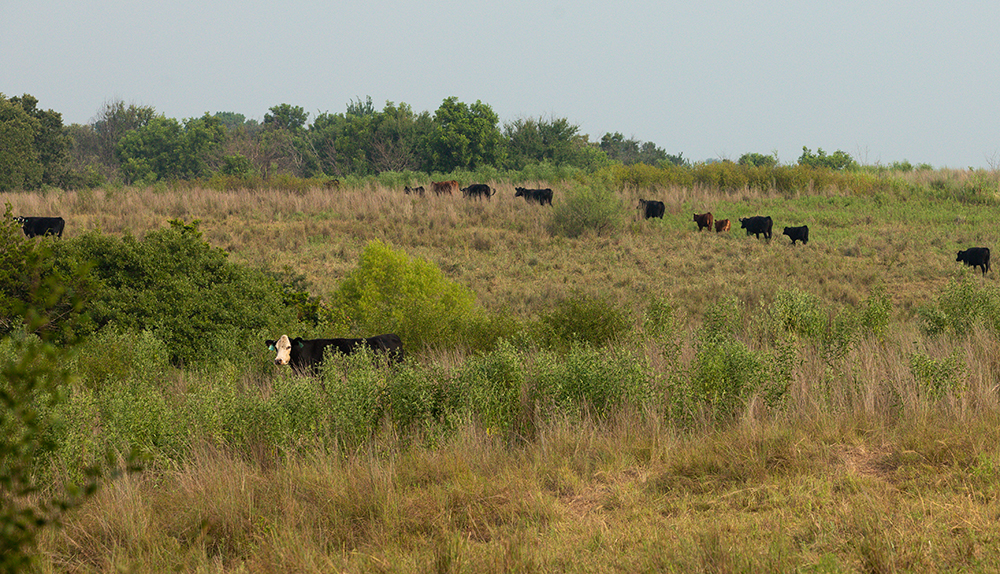
Start with what you can measure
If you have historically run roughly the same number of cattle each year, start by calculating carrying capacity and stocking rate annually. Develop a grazing plan and record what actually happens. Monitor pasture recovery and keep track of how much forage remains ahead of the herd.
Over time, those observations can help you recognize changes sooner and make decisions while you still have options.
The number of cattle your ranch can support will shift along with rainfall, forage growth and other conditions. Keeping an eye on both sides of the supply-and-demand equation can help you meet your cattle’s needs, maintain productive pastures and be ready to adjust when the grass changes.
Editor’s Note: This is part of a continuing series of articles about regenerative ranching from Noble Research Institute, long trusted by beef cattle producers for supporting the industry with research, education and consultation. Follow the series in future issues of Baldy Advantage and Hereford World, as well as in special 1881 podcasts, at Hereford.org. Additional regenerative resources and past articles in the series are also at Noble.org.

Maddy Westbrook
Maddy Westbrook, Sr. Content Writer
Maddy Westbrook is a senior content writer for Noble Research Institute. She grew up in the Texas panhandle as the fifth generation of her family’s farming and cattle feeding business before earning her bachelor’s degree in agricultural communications from Texas A&M University. Maddy’s experience spans marketing and communications within the agricultural commodity and food and beverage industries.
Comment