
How Management Influences Effective Rainfall
Ranches can't control rainfall, but healthy soils can help them capture, store and use more of the moisture they receive.
When pastures begin to dry out, it’s natural to focus on rainfall totals. Producers often watch weather forecasts, hoping the next storm will bring enough moisture to carry forage through the season.
But according to Noble Research Institute regenerative ranching advisor Jim Johnson, rainfall totals tell only part of the story.
“People always think it doesn’t rain enough,” Johnson says. “It doesn’t matter how much it rains. What matters is how much of it you keep.”
That’s where the concept of effective rainfall comes in. Effective rainfall refers to the portion of precipitation that infiltrates the soil and remains available for plant growth. Some rainfall runs off the land before it can soak in. Some evaporates from the soil surface before plants can use it. The amount that stays behind to support forage production is what really matters.
Two ranches can receive the same rainfall and experience very different results. The difference often comes down to soil health and management.
“One producer could be doing really good regenerative management and getting all of that rainfall to soak in and capture in the soil,” Johnson says. “The other could be overstocked, grazing too hard, not leaving enough residual, cutting too much hay, and so there will be less water soak in his soil and more will run off.”
Improving effective rainfall starts with understanding what happens when water hits the ground.
Why cover matters
One of the most important factors influencing effective rainfall is soil cover. Johnson points to litter — the layer of plant residue, trampled forage and manure that accumulates on the soil surface — as a critical component of a healthy water cycle.
“Those raindrops are coming down like little bombs,” he says. “And if the surface is bare, they’re going to compact the soil surface. So if it’s covered with litter, that’s going to protect the soil surface from being compacted just by the force of the raindrop.”
Litter acts as a protective layer that absorbs the impact of rainfall before it reaches the soil.
It also slows water movement across the landscape. On sloping ground, rainfall that might otherwise run downhill is held in place longer, giving it more time to infiltrate. Just as importantly, litter helps conserve moisture after rainfall occurs.
“It is a blanket over the soil to prevent evaporation,” Johnson says. “It helps hold the moisture in the soil once it’s there so it doesn’t all evaporate away.”
Bare ground has the opposite effect. Without protection from litter or living plants, soil heats up quickly and loses moisture faster.
“The more bare ground you have, the more runoff you will have from your rainfall,” Johnson says.
The role of living roots
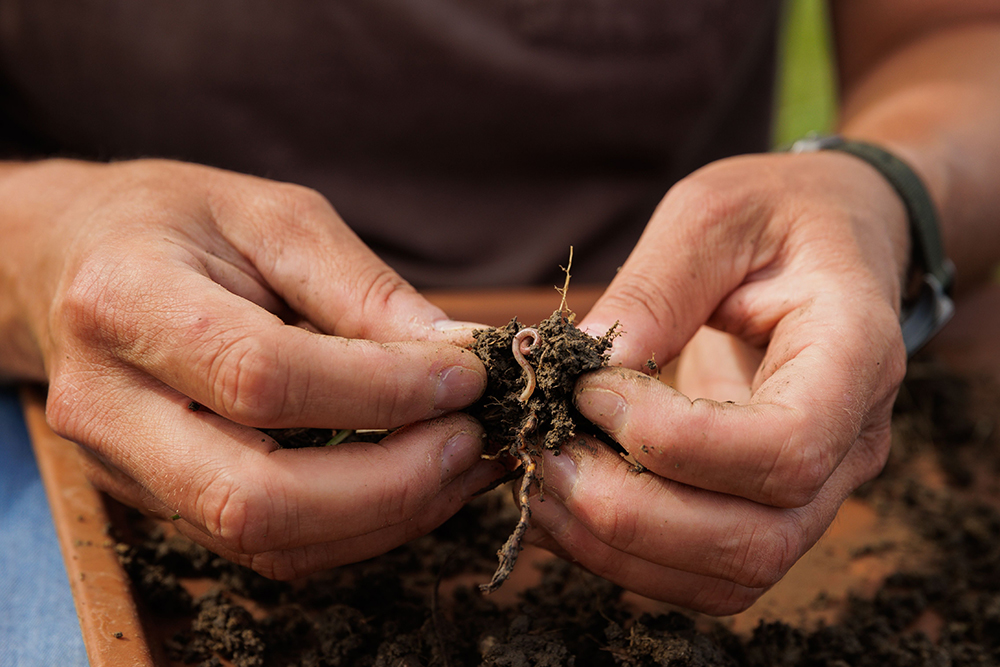
While litter protects the soil surface, living roots improve what happens beneath it. Roots create channels throughout the soil profile that allow water to move deeper into the ground. As roots die and decompose, they leave behind pore space that continue to serve as pathways for water infiltration.
“Roots are making channels into the soil,” Johnson says. “They make a lot of pore spaces to hold water and allow water to soak in.”
The process becomes even more powerful when soil biology gets involved. Earthworms often move into old root channels, creating tunnels that future roots can follow. Over time, this cycle builds a network of pathways that improves both water movement and water storage.
Roots also help form soil aggregates, groups of soil particles bound together by biological activity. The spaces between these aggregates store water that plants can later access.
“It’s like a sponge,” Johnson says. “The roots in the soil together just make a sponge.”
Management drives the water cycle
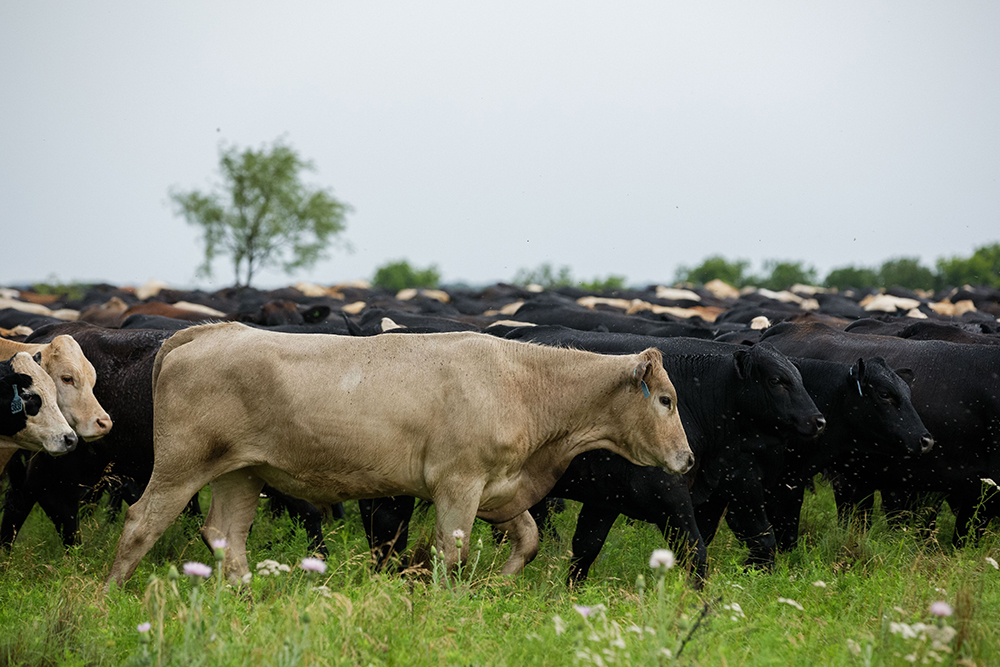
Healthy soils don’t happen by accident. Management decisions directly influence how much rainfall stays on the ranch. Johnson points to overgrazing as one of the most common challenges.
Even when stocking rates are appropriate, inadequate recovery between grazing events can limit a pasture’s ability to capture and retain rainfall.
“Your cover is always going to be short,” Johnson says. “And if your plants are always short, you’re going to have less infiltration than somebody else who has taller plants with more recovery.”
Haying can create similar challenges. After forage is cut, the soil surface is exposed to direct sunlight and higher temperatures. With less cover protecting the ground, soils can become hard and dry.
Producers looking to improve effective rainfall can focus on several practical strategies:
- Maintain soil cover throughout the year
- Reduce bare ground
- Allow adequate recovery between grazing events
- Match stocking rates to carrying capacity
- Minimize unnecessary soil disturbance
- Increase plant diversity
- Maintain living roots for as much of the year as possible
These practices align closely with the soil health principles taught through Noble’s educational programs.
Building water-holding capacity
Beyond improving infiltration, long-term management can also increase the amount of water that soil is capable of storing. One of the biggest drivers is soil organic matter.
“You can’t do a whole lot about whether you have a sandy soil or a clay soil,” Johnson says. “But organic matter can go a long, long way to improve your soil-water relationship.”
Organic matter improves both infiltration and water-holding capacity. As soil health improves, roots and biological activity can extend deeper into the soil profile, creating additional space for water storage.
Johnson often shares a commonly cited benchmark that a 1% increase in soil organic matter can translate to roughly one additional inch of effective rainfall over the course of a year. That extra moisture may not arrive all at once, but the cumulative effect across multiple rainfall events can be significant.
“There’s probably always something we can do to make it a little better,” Johnson says.
For producers facing dry conditions, that perspective offers an important reminder. While no one can control when or how much rain falls, management can influence how much of that rainfall remains available to support forage production.
“The important thing about managing your rainfall is getting it in the soil and keeping it in the soil,” Johnson says. In many cases, the most valuable water on a ranch isn’t the next rainfall event. It’s the rainfall that’s already arrived and stayed.

Maddy Westbrook
Maddy Westbrook, Sr. Content Writer
Maddy Westbrook is a senior content writer for Noble Research Institute. She grew up in the Texas panhandle as the fifth generation of her family’s farming and cattle feeding business before earning her bachelor’s degree in agricultural communications from Texas A&M University. Maddy’s experience spans marketing and communications within the agricultural commodity and food and beverage industries.
Comment