
During lean times, ranchers and farmers have found ways to maximize every square foot of land, hour of equipment and pound of livestock. Waste not, want not. A growing number of producers are having their grazing lands pull double-duty by feeding livestock on above-ground forage, and sequestering carbon underground. Carbon sequestration in grazing lands is one of those two-for-one deals that sounds too good to be true but isn’t.
Increasing soil carbon can provide agronomic benefits, like increased forage yields and improved soil health. For some landowners, it can also support carbon offset contracts. The effectiveness of sequestering carbon in grazing lands depends on environmental factors out of a rancher’s control, but management plays an important role, too.
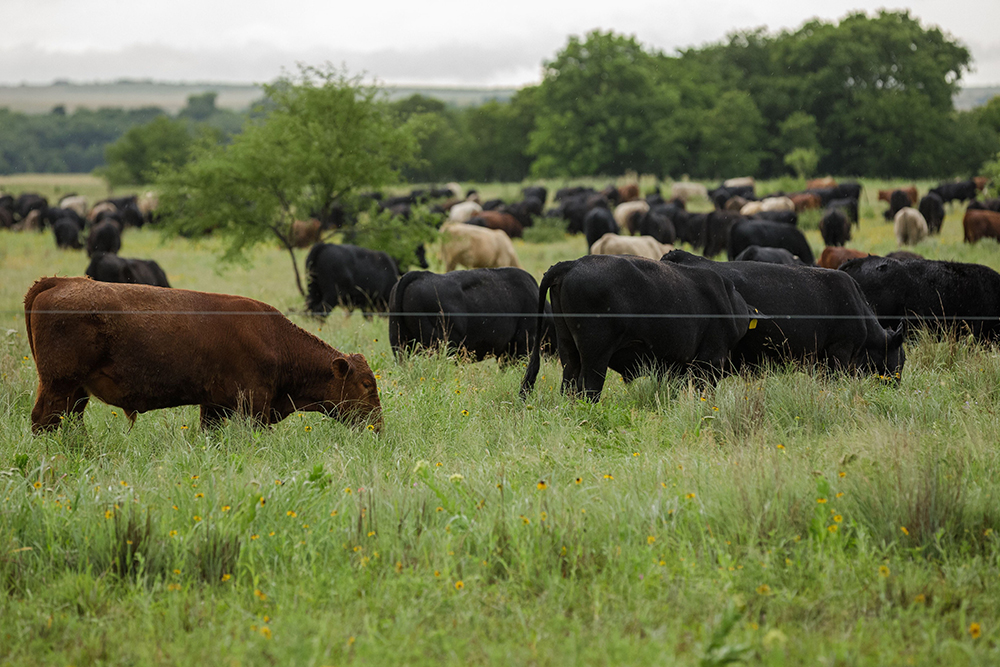
Should ranchers care if their land sequesters carbon?
Beneath a producer’s feet, their soil is storing carbon. Sequestering carbon refers to the process of transferring carbon from the atmosphere into the soil, the most stable form of carbon storage. Plants do this naturally during photosynthesis. Which makes grazing land well suited for carbon sequestration.
Whether or not a landowner is curious about carbon offset contracts, building soil carbon can pay off. Maria Silveira, Ph.D., director of research at Noble Research Institute, says there is a complementary relationship between building up carbon in the soil and forage production.
“We’re talking about increasing plant productivity, more forage, probably a higher stocking rate, more carrying capacity and storing more water in the soil,” says Silveira. “Most of these practices have some co-benefits in terms of production. It’s not just purely sequestering carbon.”
Through photosynthesis, plants pull carbon from the air and store it in their roots, then transfer a portion of it to the soil. The more above-ground biomass available for photosynthesis, the more carbon plants can capture and store. Scientists and research universities have expensive tools sensitive enough to determine changes in soil carbon during experiments, but Silveira says there’s a more practical way for ranchers to know if their management is having a positive impact on soil carbon levels.
“Atmospheric carbon, of course, is not visible; but the carbon is being sequestered through plant material, so what you can actually see is the organic matter accumulating in the soil. That’s a sign that it’s going in the right direction.”
She says the increasing soil carbon provides multiple benefits, helping grazing lands stay resilient during extreme weather events like prolonged droughts, by retaining more moisture and reducing runoff when rain does arrive.
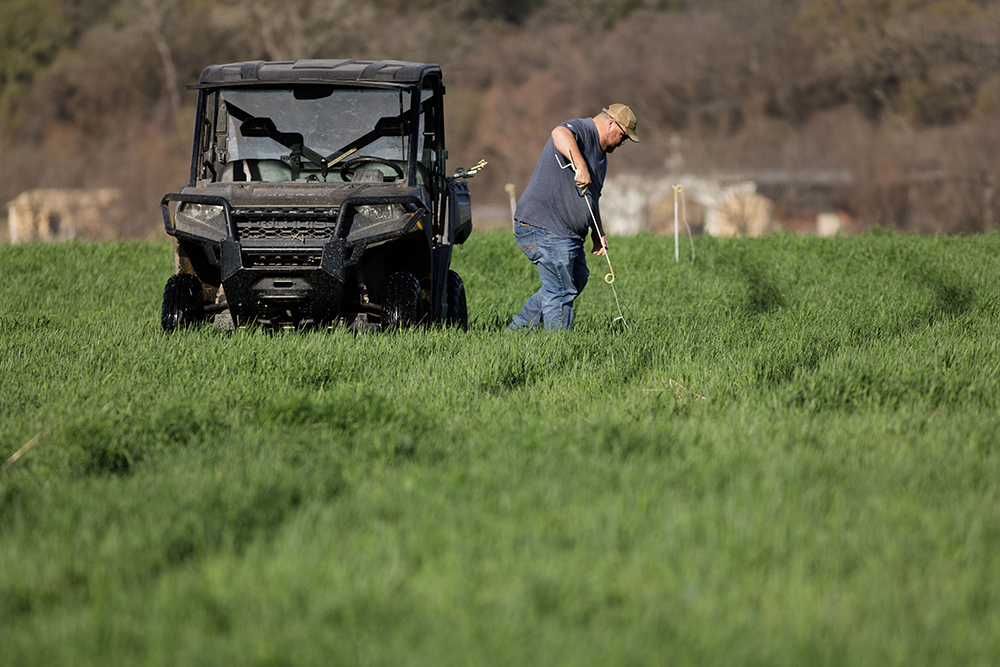
Improve your ranch’s carbon retention
When it comes to increasing soil carbon, a one-size-fits-all approach is unrealistic. A variety of management practices can help, but selecting which ones depends on environmental factors, past management and other operational goals.
“Anything that we can do to protect the soil and minimize disturbance helps create more of those stable carbon sources in the soil,” says Silveira. “And we want to increase that stable carbon in the soil because that’s what remains for centuries.”
Increasing photosynthesis capacity is the key to sequestering carbon into plant roots, and ultimately into soil. Silveira recommends practices like adaptive grazing and adequate pasture rest to improve plant productivity. Prescribed burning, planting legumes or an introduced grass, and applying fertilizer are also recommended practices to increase soil carbon.
“If the producers are not allowing the plants to fully recover their photosynthetic capacity, then you can change the balance. If the photosynthesis capacity of the plant is not large enough to overcome the amount that’s being emitted, then the land becomes a carbon source,” explains Silveira.
Often Silveira talks with ranchers and farmers who are challenged by drought or limited acreage to graze. This makes them hesitant to try new grazing management methods or invest in infrastructure. She’s sympathetic but encourages producers to take a wider view of soil carbon’s role in building healthier and more resilient grazing lands.
“If the pastures are more resistant to drought and more productive, if producers are able to graze longer or more frequently, these can be indirect ways to assess carbon in the soil,” she says.
As a former University of Florida researcher and professor, Silveira has led trials on carbon sequestration in grazing lands. She says increasing soil carbon is a long-term commitment. Measurable changes may take years or even decades. However, the benefits are often visible on the landscape before these changes are detected.

Where carbon fits into your ranch’s big picture
Silveira recommends management that increases soil carbon, not for the sake of carbon itself, but for the agronomic benefits that correlate with higher levels of soil carbon. Balancing carbon goals with other producer goals is key.
“My research in Florida showed that both native and introduced pastures are carbon sinks. Although native pastures sequester carbon at a lower rate, they’re more resilient in terms of droughts or flooding. The native is kind of constant,” says Silveira.
Silveira shares the importance of understanding how certain practices, like fertilization and prescribed burning, can both be a source of carbon and lead to long-term sequestration.
“Right after a burn, the system becomes a carbon source,” says Silveira. “That system may be a carbon source for maybe one month or two months, but in the overall annual budget, it’s still a carbon sink. Burning has such an effect that the system kind of overcompensates, increasing photosynthesis afterward.”
Certain management practices or environmental conditions may temporarily turn grazing lands into a carbon source. However, over the course of the growing season, productive grazing lands are often net carbon sinks. More productivity means more photosynthesis, which is the recipe for carbon sequestration.
“When I talk to producers, we talk about soil carbon sequestration as a secondary benefit,” says Silveira. “The focus is to make those landscapes more resilient and productive. And as a consequence, you get the benefit of having more carbon stored in the soil.”
This article was first published in the October 2026 issue of Progressive Forage.

Laura Brenner
Laura Brenner, Sr. Content Writer
Laura Brenner is a senior content writer for Noble Research Institute. She’s worked in agricultural communications for over a decade, specializing in nonprofit communications and storytelling. Laura earned a bachelor’s degree from Penn State University and a master’s degree from Purdue University. She resides near her hometown of Lancaster County in south-central Pennsylvania.

Comment