The First Five Years
Five years into Noble Research Institute's transition to regenerative ranch management, ranch managers and researchers share what they've seen change on the land and among the herds.
In February 2021, Noble Research Institute announced that the 75-year-old agricultural research organization would focus all of its operations on regenerative ranching. In the five years since then, Noble’s 13,500 acres of working ranch lands embarked on a transition from conventional management to adaptive management. Each ranch has its own unique context, challenges and breakthroughs. To celebrate five years of regenerative management on Noble’s ranches, our ranches and research teams share what’s changed since 2021.
Animal Husbandry
In the last five years, since Noble began managing its ranches regeneratively, how have you seen livestock performance evolve? Has it improved or stayed the same? In what ways?
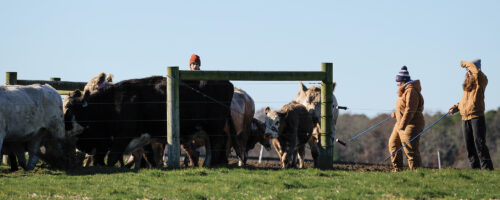
“The cattle seem to be more accustomed to frequent moves. They’re calmer around humans and maintain a good body condition with better pasture monitoring and plant diversity.”
— Jeremy Westfall, Ranch Assistant, Coffey Ranch
“Animal behavior improved and handling is easier. Resilience to environmental stress, such as drought, has been strengthened through adaptive management. I think forage and soil improvements support overall nutrition and long-term carrying capacity better than before.”
— Frank Rhoades, Ranch Assistant, Oswalt Ranch
“Here on the Oswalt Ranch we have seen our livestock adapt and thrive on being rotated every day in a regenerative fashion by getting fresh grass each time, keeping parasites down to a minimum. We have also seen our pastures thrive with plenty of rest and recovery. And by letting them grow back, we can hold moisture in the ground longer and prevent runoff.”
— Chance Tynes, Ranch Manager, Oswalt Ranch
“I would say one of the biggest takeaways that I have had in the last five years is giving livestock the opportunity to be productive on what would traditionally be considered poor or inadequate forage. By setting aside what we think a cow should be eating and observing what they are eating and how they are performing, we can better evolve our individual animal performance by selecting for animals that are productive on what we can grow. Our livestock performance has evolved from an animal that requires multiple inputs to maintain production, to one that requires much less to maintain production, and I believe that is a great improvement.”
— Joe Pokay, General Ranch Manager
Plant Diversity
In the last five years, what plant species have you seen return to the land? Is a species more abundant or less abundant than before? Has a new-to-the ranch species appeared?
“I can share insights from the EPSCoR project, comparing our adaptive vs. prescriptive grazing pastures.
In introduced pastures, we observed an increase of native plant communities under adaptive grazing. This aligns with higher species evenness and Shannon diversity, suggesting that native annual forbs, annual grasses and other subordinate species that were previously suppressed are becoming more common on the landscape. Previously dominant species have become less abundant.
In native rangeland, dominant grass species declined under both grazing strategies, with stronger declines under prescriptive grazing. These declines were accompanied by increases in subdominant C4 grasses, midgrasses and tallgrasses. Tallgrass abundance, increased more under adaptive grazing, suggesting recovery of structural components characteristic of healthier native rangeland. Forb diversity decreased in adaptive, consistent with some of the literature stating that high-stock-density grazing has a filtering effect for tolerant species.
Overall, the consistent increases in native species’ abundance, subdominant grasses, annual forbs and legumes under both grazing strategies, indicate that species already present at very low levels are now expressing more strongly. I believe we can say that both grazing management strategies facilitated the functional return of a more diverse and resilient plant community, even under highly variable weather conditions and recurring drought.”
— Isabella De Faria Maciel, Systems Research Manager
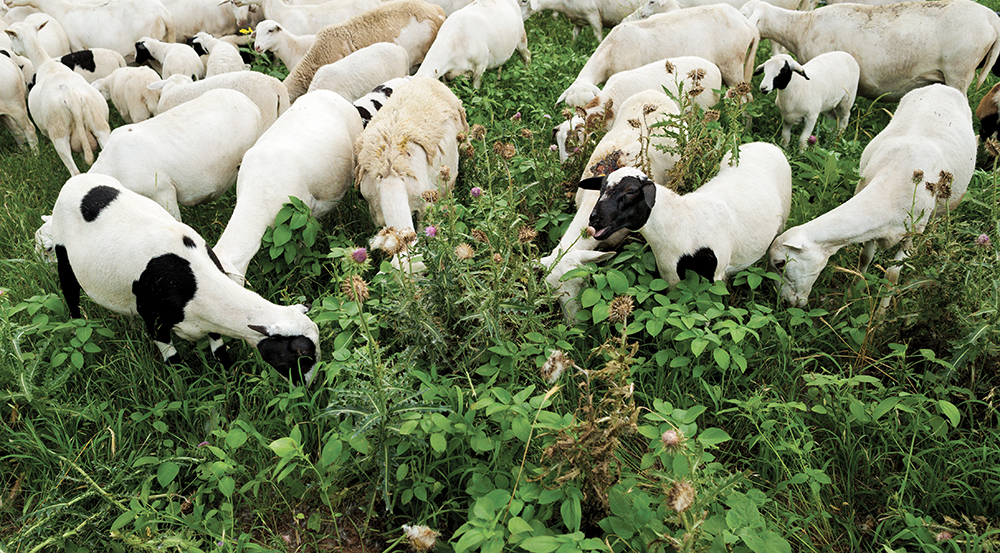
“In the last five years, I’ve seen some native plants come in — not many because the Red River Ranch is all Bermuda-introduced grasses. And I’ve seen cattle eat other plants/forbs that before they wouldn’t have cause we would’ve had sprayed them.”
— Kye Henington, Ranch Foreman, Red River Ranch
“There are areas on every ranch where a highly desirable species is becoming more prevalent. But more than individual plant species that have returned, my take-away on plant diversity is more focused on how the species of plants ebb and flow between years.
For example, pastures that were completely full of what some would consider ‘undesirable weeds’ one year will be almost devoid of that species the next year. Traditionally, we have been taught to manage ‘weeds’ chemically or physically before they go to seed so there are less weeds the next year. The more I observe yearslong transitions, it becomes apparent that this philosophy is flawed. We would spray weeds every year and not have a whole lot less the next year, and maybe no change at all in a few years. The weeds are a sign of our management and are trying to tell us to fix something in the way we are managing.
Anecdotally, I believe the ‘weeds’ are fixing the most limiting factor in the soil, and after a year of doing their job, that issue is resolved, and something else can grow to fix the next issue. Our job is to graze through that with a livestock species that can be the most productive from it and allow the soil to recover once more. Overall, especially after a good year with rain, total forage is more abundant across all the ranches, and that is a testament to good management.”
— Joe Pokay, General Ranch Manager
Wildlife
In the last five years, since Noble began managing its ranches adaptively, what changes have you seen in wildlife species? Any behavior changes or population growth/decline? Has a new-to-the-ranch species appeared?
“On Headquarters Ranch, the first thing I noticed was in the areas that were not typically plowed or had heavy chemical use, the areas were basically used to bale hay. There, I used high stock density in early spring and let it rest for six months or more. After that, there was an explosion of native grasses that came in that I had not seen before. Mainly big bluestem. Since then, other natives came, including Indian grass, little bluestem, and side oats grama.
There was another area that had typically been planted in alfalfa. In the second year of regenerative management, I saw an increase in eastern gamagrass. Some areas that were usually plowed have seen an increase in summer grasses, such as crabgrass and buffalo grass. This year, I have seen an increase in Indian grass in areas where I have not seen it before. The forb community seems to be changing nearly every year since we have gone regenerative.
Over the past couple of years, I have been decreasing the amount of acreage I have been no-till drilling the cool season crops due to the fact that many are coming in volunteer. I hope I will be able to stop planting. I still plant the areas that had been abused over the years with summer and cool seasons, but I have seen an increase in both the summer and cool season volunteer grasses and forbs.”
— Paul Luna, Ranch Manager, Headquarters Ranch
“Since we’ve become regen, and we’re not growing just monoculture, we’ve had zero issues with armyworms. Not saying they won’t show up again, just that we haven’t had an issue, and I know our neighbors have. We quit spraying insecticides and weeds, so now we grow different species that flower and attract those pollinators. I have pictures of weeds that produce flowers, and the bees were flying all over them. The ranch has tons of dung beetles on it now. They might have been there before, but I wasn’t looking for them then.”
— Kevin Pierce, Ranch Manager, Red River Ranch
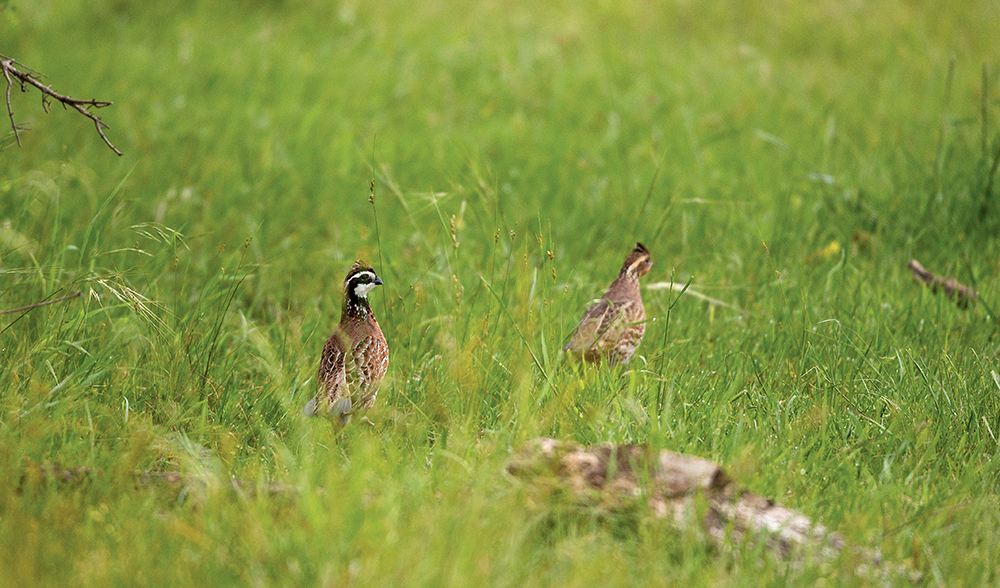
“In the last five years, I’ve seen more turkeys, butterflies, dung beetles and other insects come in. I suspect that’s because we’re not spraying anything.”
— Kye Henington, Ranch Foreman, Red River Ranch

Laura Brenner
Laura Brenner, Sr. Content Writer
Laura Brenner is a senior content writer for Noble Research Institute. She’s worked in agricultural communications for over a decade, specializing in nonprofit communications and storytelling. Laura earned a bachelor’s degree from Penn State University and a master’s degree from Purdue University. She resides near her hometown of Lancaster County in south-central Pennsylvania.