
Connecting Field Observation and Soil Test Results
New Noble research study ties what you can see above ground to the health of your soils.
Healthy soil is more than dirt. It’s a living system that supports plant growth, retains water and stores carbon.
Within the multi-year Metrics, Management, & Monitoring (3M) project, a months-long study from Noble’s research team found visible signs of ecological health — such as plant diversity and fast water infiltration — can tell ranchers a lot about what’s happening beneath the surface. In this summary of the report “Can Ecological Outcomes Be Used to Assess Soil Health?,” our researchers share their findings of practical ways ranchers can evaluate the health of their soils without relying solely on expensive lab tests.
Learning to Understand Soil
The land tells a story for observant ranchers and land managers. Whether it’s through the health of forage, how long water puddles last after rain or the variety of plant species you see across your pastures, the clues are there. The ecological outcomes report shared that these above-ground signs are tightly connected to the biology below the surface and can serve as a proxy for soil health.
Researchers collected hundreds of visual observations and 64 soil samples on 22 ranches across different climates and landscapes in Oklahoma and Texas to compare lab test results with ecological outcome verification (EOV), or what they could observe on site. EOV looks at a variety of factors, including live canopy cover, plant community composition by functional group, microfauna, litter and dung decomposition, erosion and soil crusting. These indicators are grouped into four categories: water cycling, mineral cycling, energy cycling and plant biodiversity.
Researchers compared those observations to soil sample test results using both the Haney soil health test and the phospholipid fatty acid (PLFA) test, which together measure microbial activity, organic matter and carbon levels. What they found confirms what many experienced land managers already suspect: The healthiest soils are alive with microbes, fed by diverse plants and shaped by how we manage the land.
Noble systems research manager Isabella Maciel says she believes the findings of this research are valuable for every rancher interested in improving soil health and forage productivity.
“No one knows the land better than the person walking it every day,” Maciel says. “Careful observation — the diversity of the grass, the feel and smell of the soil, the behavior of livestock — tells a story no test can fully capture. Trusting your eyes and instincts can guide decisions that build healthier soils and more resilient pastures.”
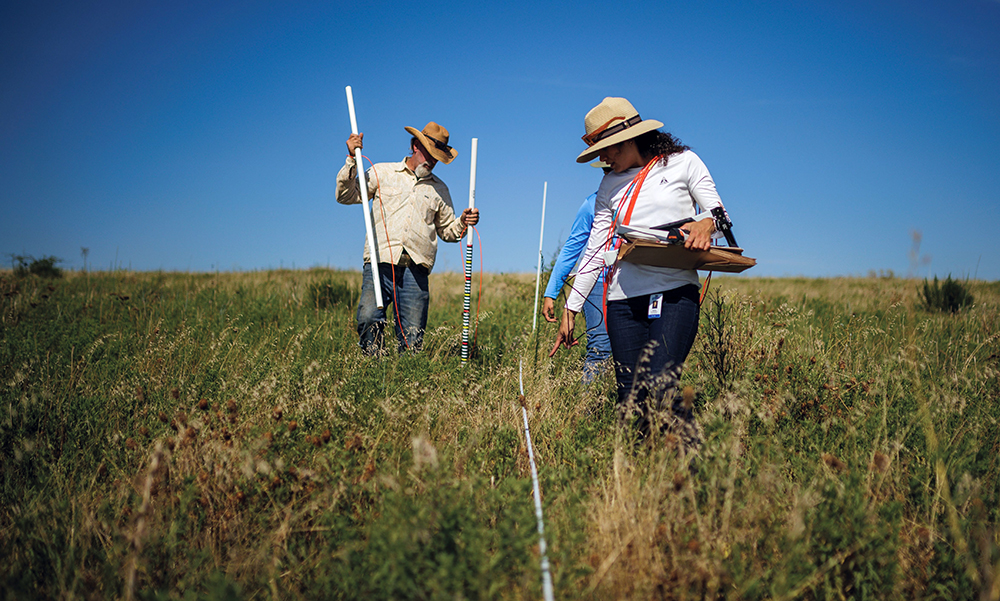
Key Lessons from the Ground Up
Healthy soil is teeming with life. Microbes — tiny living organisms like bacteria and fungi — play a vital role in breaking down organic matter, releasing nutrients and supporting plant growth. The study found that soils with more microbial activity tended to have stronger scores for water and energy cycling, meaning they supported more resilient and productive ecosystems.
These microbes thrive when they have food (organic matter) and air (via porous soil). That’s why practices that reduce soil disturbance and keep roots in the ground year-round are so important.
Plant diversity is a strong predictor of microbial activity. The study showed that the more plant diversity ranchers had in their pastures, the better their soil performed in the lab. Soils from fields with a variety of grasses, legumes and broadleaf plants had higher levels of organic carbon and microbial biomass. Why? Because different plants support different microbes and, together, they build a stronger soil community.
Diverse plant roots also feed soil life more evenly over the year, better protect against erosion and help soils hold more water than monocultures do.
One of the simplest field tests — watching how quickly water soaks into the soil — turned out to be one of the most reliable indicators of soil health. Fast infiltration rates were linked to higher microbial activity and more available carbon in the soil. That’s because well-structured soils, rich in organic matter and teeming with roots, have better pore space for water and air.
The study also highlighted the role of arbuscular mycorrhizal fungi — tiny root-associated fungi that help plants take up water and nutrients. Fields with higher levels of these fungi showed better performance in water cycling. Keeping perennial roots in the ground and reducing chemical inputs can help these beneficial fungi thrive.
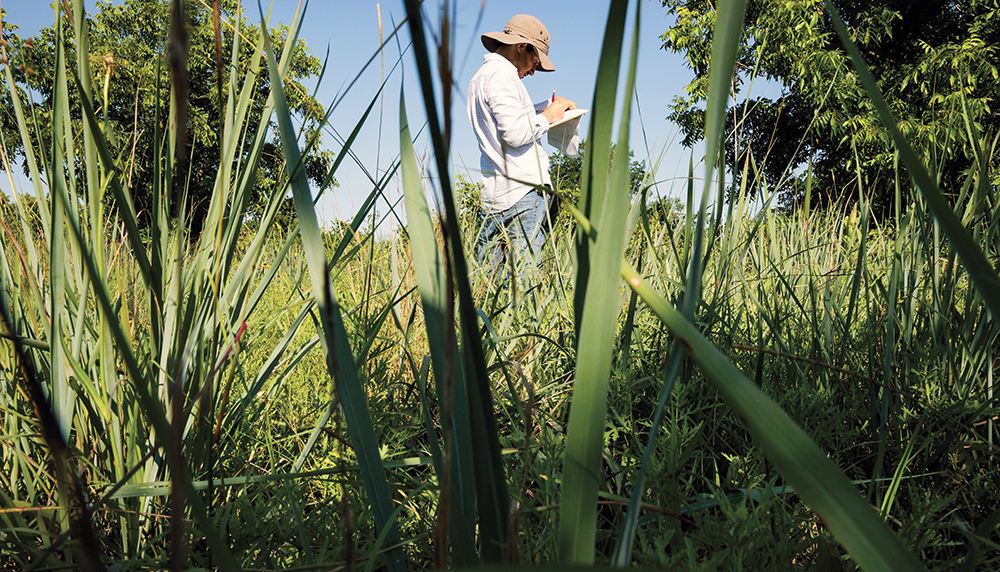
What You Can Do On Your Ranch Today
This research wasn’t just for scientists — it was designed with land managers in mind. Here are a few practical ways to take these lessons from the lab and put them into action on your farm or ranch:
Start with Observation
Walk your land regularly. Notice how water behaves after rain, what kinds of plants are growing and how evenly your pastures recover after grazing. Use tools like infiltration rings or a shovel to get a feel for your soil’s condition.
Build Plant Diversity
If your pastures are dominated by one or two species, consider overseeding with a diverse mix of grasses, legumes and forbs. Diversity promotes resilience, especially during extreme weather.
Reduce Soil Disturbance
Avoid overgrazing and minimize tillage to protect soil structure and microbial life. Where possible, keep living roots in the soil year-round.
Focus On Organic Matter
Use practices like adaptive grazing, cover cropping and compost application to increase soil organic matter. More organic matter means better water retention, more microbial activity and healthier plants.
Use Monitoring Tools Wisely
While lab tests like Haney or PLFA analysis provide useful information, they are more powerful when combined with visual indicators, such as water infiltration and plant diversity, which offer real-time feedback you can act on right away.
Soil health doesn’t have to be a mystery, nor do you have to invest in a soil test every time you want to know how you’re doing. By paying close attention to what’s happening above ground, ranchers and farmers can gain valuable insight into what’s happening below. The key is understanding that soil is alive, and its health depends on thoughtful management decisions based on active observation.
Whether you’re managing 50 acres or 5,000, small changes — like increasing plant variety and reducing bare ground — can make a big difference. Healthy soil is the foundation for a resilient future, and it starts with listening to the land.

Laura Brenner
Laura Brenner, Sr. Content Writer
Laura Brenner is a senior content writer for Noble Research Institute. She’s worked in agricultural communications for over a decade, specializing in nonprofit communications and storytelling. Laura earned a bachelor’s degree from Penn State University and a master’s degree from Purdue University. She resides near her hometown of Lancaster County in south-central Pennsylvania.

Comment
Leave a Reply
2 comment on: "Connecting Field Observation and Soil Test Results""
Paul roydhouse
November 18, 2025I bought a small piece of property with a grazing field on it. I’d like to improve the soil. I’m in Florida. It’s very dry all winter thinking about making a feed lot for the animals in the open field about 5 acres, but I don’t get much rain in the winter should I wait till spring rains don’t really start till about May
Noble Research Institute
November 18, 2025There are a lot of factors that we’d need to know and consider, such as what type of livestock, the current status of the field, what regenerative principles you’d like to adopt, how you’d like to predominantly nourish the livestock, etc. Generally speaking, though, if you do not have the forage to feed the livestock, it may be more profitable to hold off than to purchase livestock and the substitutional feed needed.
If you’d like to learn more about this, we cover stocking rates and much more in Noble Grazing Essentials and Business of Grazing. We also offer consultation services.