
The Land Comes First
How the Colorado State Land Board and its agricultural lessees are working together to steward a more regenerative future for agriculture in the Rocky Mountain State.
Across Colorado’s sweeping plains and rugged canyon country, ranchers and state officials are proving that land can be managed with both agricultural productivity and long-term stewardship in mind. Ranchers are collaborating with the Colorado State Land Board — the state’s second-largest landholder — to balance rancher profitability, natural resource conservation and education funding.
Together, they’re redefining what agricultural leases on state trust lands look like, and the lessons they’re learning could influence how other states manage the millions of acres of state-owned lands across the West.
A History Of State Trust Land In Colorado
When Colorado became a state in 1876, Congress granted it millions of acres of land — designated as state trust lands — to generate revenue for public education. Some call these “school sections,” as each one is 640 acres. Today, the Colorado State Land Board manages 2.8 million acres of surface land — roughly 10% of all agricultural land in Colorado — making it a critical link between rangeland stewardship and school funding.
In addition to the school sections, the State Land Board owns larger tracts of land — the largest covering more than 86,000 acres — that have been purchased over time to create contiguous blocks of rangeland.
“The founding fathers believed that one of the most important aspects of a successful democracy was an educated electorate,” explains Jesse Price, the State Land Board’s regenerative agriculture manager. “So the purpose of the management of that land was to fund public schools.”
Over time, that mission evolved. A constitutional amendment later clarified that the State Land Board’s purpose was not only to generate reasonable and consistent revenue, but to do so in conjunction with the stewardship of the lands. “We want to make sure we can generate that revenue over time,” Price says, “so we really have a large time scope when we think about how we manage and take care of the land under our purview.”
Today, roughly 96% of the state-owned surface lands are leased for agriculture, primarily to ranchers who use them as part of larger grazing operations. These leases, usually 10 years in length, provide long-term stability for lessees while helping fund public schools through rent payments. The State Land Board also owns 4 million acres of mineral estate, which can be leased to provide additional revenue streams for schools.
“There’s a lot less risk in leasing from the State Land Board than leasing in the private sector,” says Price. “A 10-year lease is a huge benefit — you can count on it.”
Building Trust, Lease By Lease
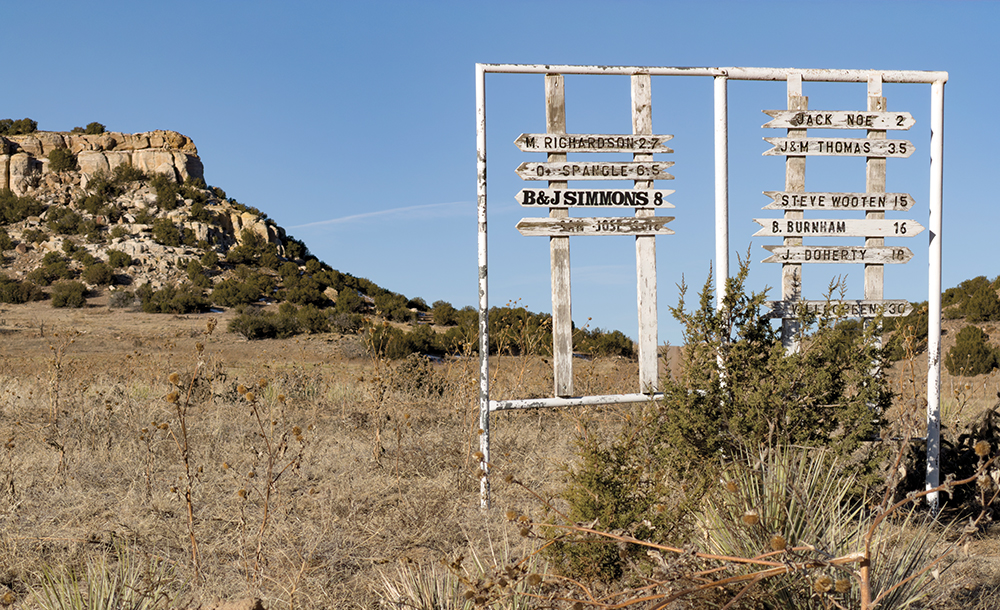
For Jackson Donnell, a fifth-generation rancher who also serves as the southern resource specialist for the Colorado State Land Board, public lands stewardship is both professional and personal. His family has leased the same school section for generations. “You treat it like it’s yours,” he says. “You rotate your cattle through like you would if it was your own grass.”
Donnell sees stewardship as a form of long-term investment — one that requires communication and trust between the State Land Board and lessees. “Even when there’s not a formal rulebook for stewardship, producers understand that good management benefits everyone — the land, the cattle and the state.”
Price echoed that sentiment. “We’re essentially being funded by whatever resource we’re using, but we want to do it in a responsible and sustainable way so that future generations can keep using it,” he says.
Price’s wife’s family ranch, which includes four school sections, has leased from the State Land Board since 1903. “My son is the seventh generation to live on this ranch,” he says. “Part of my job, my personal mission, is to make sure those leases are still here and available for the next seven generations.”
That generational perspective, Price says, shapes how the agency operates. “We have a different time horizon than most organizations,” he notes. “We’ve been around for nearly 150 years, and we plan to hold on to the vast majority of this land for at least another 150. So we’re thinking about decisions that last centuries.”
The connection between State Land Board staff and the land runs deep. Price and Donnell are two examples of how the agency cultivates trust. It’s their connection to the ranching community and commitment to the State Land Board’s mission that eases relationships between lessor and lessee. “Without stewardship, you don’t really have a long-term plan,” says Donnell. “What you do today affects what you have 20 years from now.”
Stewardship On Shared Ground
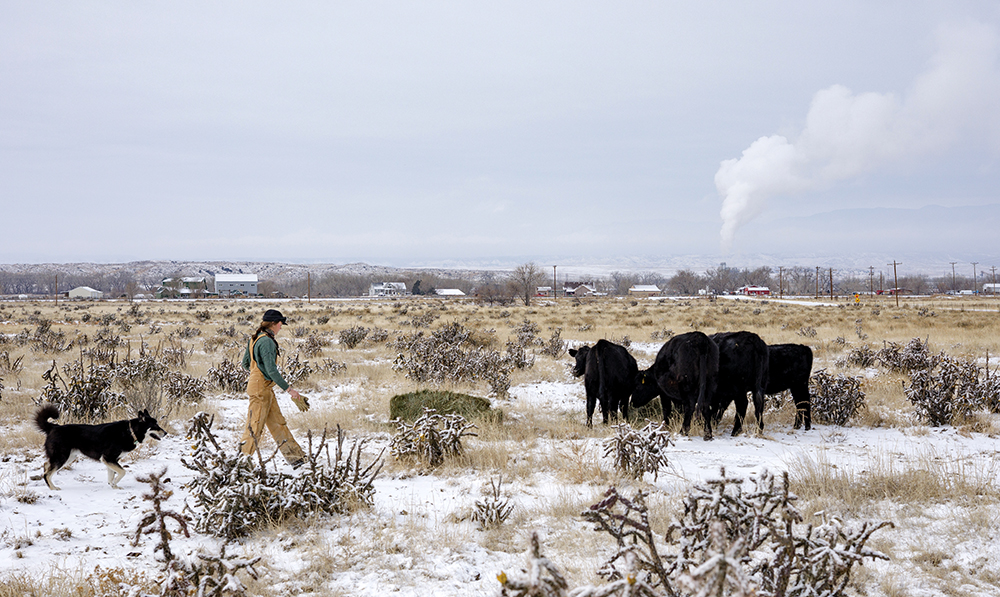
Steve Wooten is a rancher in southern Colorado who owns Beatty Canyon Ranch. Wooten partnered with another local ranch family to lease the Chancellor Ranch, more than 51,000 acres of state trust land. When he took over the lease 10 years ago, the property had been degraded by years of overuse. “With some judicious work and our style of adaptive grazing management,” he says, “we feel like the ranch has made a substantial comeback.”
Wooten’s philosophy aligns closely with the State Land Board’s dual mission. His ranch integrates wildlife habitat restoration, data-driven adaptive grazing and experimentation with technology like virtual fencing. “It’s an adaptive tool that saves us from paying for interior fencing at $10,000 a mile,” he says. “It lets you manage cattle movement without the cost and disruption.”
Price says partnerships like Wooten’s reflect the kind of stewardship the agency wants to encourage. “We want to see good stewards of the land,” he explains. “We look for things like healthy ground cover, diversity in plant species and variety in what’s being grazed. We don’t want to see bare ground or overuse — we want land that’s regenerating and resilient.”
That emphasis on resilience resonates with producers like Wooten. “We’ve improved the condition of the ranch. We’ve got more grass, more resiliency and better drought management,” Wooten says. “It’s become a way of doing business, but it’s also what we love to do — especially when we see success.”
Leasing Challenges And Market Pressures
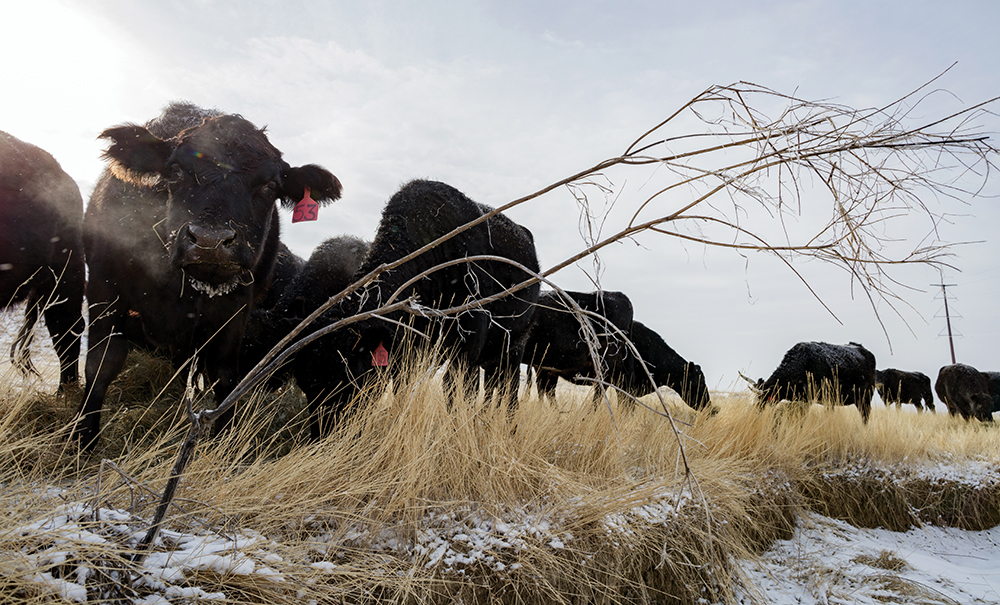
For many ranchers, leasing state trust land remains essential to their operations — but it comes with challenges. Maggie Hanna, who operates Hanna Ranch in south-central Colorado, leases roughly 60% of her operation from the State Land Board. “Our relationship to the state trust lands is about as vital a relationship as any other component of this operation,” she says.
The Hanna family signed their first State Land Board lease in 1947. The ranch has relied on that land ever since. Hanna grew up watching her father navigate management decisions on the family ranch. She describes her father’s approach to ranching as “ahead of his time.” She’s referring to his personal interest in natural resource conservation paired with cattle production, which was a relatively novel approach in the 1980s. It’s a tradition she’s carried on long after his passing, but it may be in jeopardy.
Hanna acknowledges the growing uncertainty that can come with leasing so much state-owned land. “When you go through ranch planning, you are asked to address your ranch’s greatest weaknesses, and losing the state trust land is one of our greatest threats just because it is such a substantial part of the operation.”
Price confirmed that turnover in leases has become more frequent. “In the early 2000s, we didn’t see leases turn over hardly at all,” he says. “Now we’re seeing more competitive bids — just because there’s limited availability of grazing lands.”
With less available grazing lands — and open space generally — available, leases like Hanna’s become more attractive to bidders of all kinds, not just neighboring ranchers.
The State Land Board layers leases on some land. This means a rancher can sign a grazing lease for the same land that an oil and gas company uses for a mineral lease. “There is no direct competition between the industries,” explains Price. “They have separate leases within the same property, and all have access as they need it.”
“I ranch 12 miles from the Front Range just off I-25,” Hanna says, “so we get a lot of urban pressure. A property north of us has developed into 5,000 acres of solar panels.”
Despite this pressure, both Hanna and Price believe the State Land Board’s focus on stewardship creates an environment where agriculture remains viable. “The regenerative grazing commitment of the State Land Board is a hopeful olive branch,” Hanna says. “They still see value in working lands. They are committed to holding our hands moving forward and being on this journey with us.”
A Progressive Vision For The Future
In recent years, the Colorado State Land Board has taken a more proactive approach to stewardship — experimenting with regenerative management principles and biodiversity monitoring.
“We’re pretty heavily invested in biocarbon sequestration through better grazing,” Price says. “We’re entering into lease agreements with carbon development companies. The State Land Board is very progressive in a lot of aspects — and we can’t do that without regenerative management practices.”
This shift is driven not just by state policy, but by producers themselves. “I think landowners and producers coming to us asking questions really spurred this faster than we had anticipated,” Price says. “There are a lot of producers who have implemented regenerative practices in one way or another long before we started calling it that.”
That bottom-up innovation aligns with the agency’s philosophy. “A good idea can come from anywhere,” Price says. “As often as we share knowledge with lessees, we’re learning from them too. They’re the ones on the ground who know the land best.”
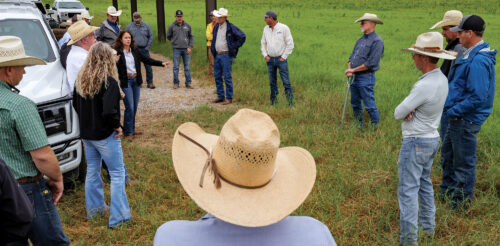
One example of that collaboration came through the Noble Land Essentials course, hosted in partnership with the Noble Research Institute last year. “It went very, very well,” Price says. “All the feedback I’ve received was positive. The content was practical, hands-on and resonated with producers.”
The State Land Board is planning to expand those education opportunities statewide. “We’re going to have three one-day seminars next year instead of two,” Price says. “And eventually we want to have one in everyone’s backyard, so they don’t have to travel a hundred miles to get to one.”
Progress Through Collaboration
The State Land Board operates as a self-funded agency, meaning it receives no tax dollars. All revenue from leases — whether from agriculture, energy or recreation — goes directly into the Public School Fund, supporting K-12 students across the state.
That model requires balance. “We’re funded by the resources we manage,” Price says, “but we want to make sure we’re doing it responsibly so that it’s still here for future generations.”
Wooten sees that balance as the foundation of Colorado’s success. “The biggest threat isn’t plowing the plains,” he says. “It’s losing 700 acres a day to urban encroachment. We may be our own worst enemy — the more we improve the ranch, the more attractive it becomes to others.”
The State Land Board’s approach — emphasizing collaboration, education and long-term stewardship — places the land at the center of the conversation. Ranchers have always been incentivized to care for their land, which aligns with the State Land Board’s goal to provide a sustainable revenue source for generations of students to come. As Price put it, “Our job is to remove barriers, test ideas and make sure good management continues to be possible.”
In addition to sharing information and resources about regenerative management, the State Land Board also invested in a full-time biodiversity manager. Their role is to look at setting up partnerships and opportunities to improve biodiversity on state trust lands and enhance resilience through healthier ecosystems.
Despite concerns about the future of her ranch, Hanna values the State Land Board’s role in Colorado agriculture. “Colorado’s state trust lands are showing what it looks like when producers are treated as partners, not just tenants,” she says.
In Colorado, the partnership between State Land Board acres and private hands is working — not just for ranchers and schools, but for the land itself. And as landowners and ranchers across the country look for models to sustain working landscapes and rural communities, Colorado’s State Land Board offers a blueprint for the future of collaborative land stewardship.
Laura Brenner
Laura Brenner, Sr. Content Writer
Laura Brenner is a senior content writer for Noble Research Institute. She’s worked in agricultural communications for over a decade, specializing in nonprofit communications and storytelling. Laura earned a bachelor’s degree from Penn State University and a master’s degree from Purdue University. She resides near her hometown of Lancaster County in south-central Pennsylvania.
Comment