
Effective pasture management is essential for maintaining a healthy grazing ecosystem and a profitable livestock operation. One of the most persistent and often misunderstood challenges producers face is overgrazing and its impact on both pasture condition and animal performance.
Although frequently confused with overstocking, overgrazing is not simply a matter of running too many animals per acre. Understanding the distinction between these two concepts and their consequences is critical for maintaining pasture health, maximizing forage production, and supporting long-term productivity.
What Is Overgrazing?
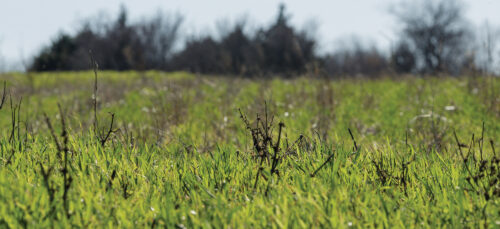
Overgrazing occurs when plants are grazed repeatedly without adequate time to recover. This weakens plant vigor, reduces root development, and diminishes ground cover, ultimately degrading the entire pasture ecosystem.
Importantly, overgrazing is less about the number of animals and more about timing, frequency, and duration of grazing. When livestock return to graze plants before they have recovered from a previous grazing event, those plants must rely on stored energy reserves to regrow.
Repeated grazing during this vulnerable stage weakens the plant, reduces productivity, and causes root systems to shrink. Over time, desirable forage species decline and are replaced by less productive or less palatable plants, reducing overall pasture quality and performance.
What Is Overstocking?
Overstocking refers to placing more livestock on a given area than it can sustainably support over time. It is typically expressed as stocking rate, or animals per acre, relative to the pasture’s carrying capacity. Carrying capacity is the maximum number of animals the land can support without long-term damage.
While overstocking can contribute to overgrazing, the two are not the same. Pastures can become overgrazed even at an appropriate stocking rate when recovery periods are too short or grazing pressure is poorly managed.
Likewise, higher stocking densities can be managed successfully when grazing periods are controlled and plants receive adequate recovery time.
How Overgrazing Impacts Pasture Production
Pasture productivity depends on maintaining a balance between grazing pressure and plant recovery. When that balance is disrupted, several negative outcomes can occur.
Reduced Forage Yield
Plants grazed before full recovery must rely on stored root carbohydrates for regrowth. Repeated defoliation prevents plants from fully replenishing energy reserves, leading to reduced forage production, thinning stands, and declining productivity over time.
Loss of Desirable Species
Livestock naturally select the most palatable and nutritious plants. Without sufficient recovery time, these preferred species are grazed repeatedly and weakened. As their populations decline, less desirable species, including weeds and invasive plants, often fill the void, lowering forage quality and overall production.
Soil Compaction and Erosion
Insufficient plant cover exposes soil to compaction from hoof traffic and increases susceptibility to erosion. Compacted soils limit root growth and reduce water infiltration, slowing plant recovery and increasing vulnerability during dry periods. Soil structure deteriorates as pore space for air, water, and microbial activity decreases.
Reduced Water-Holding Capacity
Declining root systems and reduced ground cover limit the soil’s ability to absorb and retain rainfall. Less water is available for plant growth, increasing drought vulnerability and reducing overall pasture resilience.
Weed and Brush Encroachment
Degraded pastures create opportunities for opportunistic species to establish. In many cases, this includes invasive weeds or woody brush, particularly in arid environments. These species further reduce forage availability and carrying capacity.
The Long-Term Impact of Overgrazing
The effects of overgrazing extend far beyond short-term declines in production. Repeated stress on plants reduces both aboveground biomass and root depth, contributing to declines in soil organic matter and microbial activity.
As soil health deteriorates, carrying capacity declines and pastures become increasingly vulnerable to drought, flooding, and temperature extremes. In severe cases, particularly in arid and semi-arid regions, chronic overgrazing can contribute to desertification.
Overgrazing is not simply a function of animal numbers. It is driven by grazing management, particularly the timing, frequency, and intensity of grazing events. Consistent grazing without adequate recovery reduces root growth, lowers productivity, and compromises pasture resilience.
Understanding plant growth cycles and implementing grazing strategies that prioritize recovery can help producers maintain productive, resilient pastures while supporting long-term profitability and land health.

Charles Rohla, Ph.D.
Charles Rohla, Ph.D., serves as a Sr. Regenerative Ranching Advisor at Noble Research Institute. He joined Noble in 2006. He is actively involved with several state and national pecan and agriculture organizations. He has a bachelor’s degree in animal science, a master’s degree in agricultural education and a Ph.D. in crop science from Oklahoma State University.
Comment