Science in Service of Stewardship
A Q&A with Dr. Maria Silveira, Director of Research, about her vision for the future of research at Noble.
After nearly two decades leading research and extension programs at the University of Florida, Maria Silveira, Ph.D., joined Noble Research Institute in June 2025 as director of research. A nationally recognized soil scientist and expert in grassland biogeochemistry, she has authored more than 159 peer-reviewed publications and secured over $24 million in competitive research funding. Now she brings her expertise in soil health, nutrient management and sustainable grazing systems to Noble, where she is guiding a new producer-focused research roadmap for the next five years.
Q: You are new to Noble. What brought you here, and when did you start?
A: I officially started full-time on June 16, 2025. I had been transitioning since January while wrapping up projects in Florida. I came because Noble allows me to do what I tried to do as one faculty member but with a full team, real ranches and a mission to help producers. The scale and the potential for impact are much greater here.
Q: Where does the five-year research roadmap stand?
A: It is intentionally still in development. I want producer input first, along with feedback from other Noble teams. Needs change over five years, so the plan should remain flexible and responsive, not rigid.
Q: Is this a new direction or a continuation?
A: It continues Noble’s philosophy and mission. What is new is the long-term focus that connects current projects to where we want to be in five years instead of moving one project at a time. It also addresses existing gaps in our current research efforts.
Q: What are the main priorities?
A: There are five interconnected priorities, all focused on producers and on producing tangible outcomes.
- Producer-centric solutions: Be responsive to evolving producer needs and deliver science-based information that creates tangible benefits for producers.
- Soil and natural resources protection: Restore soil function while also protecting water, biodiversity and wildlife habitat.
- Building resilience and productivity: Manage grazing lands to enhance productivity, profitability and resilience to external stressors such as drought or pests.
- Science-based communication: Share unbiased, science-based information with producers, policymakers and the public.
- Emerging technology: Evaluate tools such as remote sensing, precision livestock management and virtual fencing through rigorous scientific methods.
Q: What does it mean for research to be “producer-focused”?
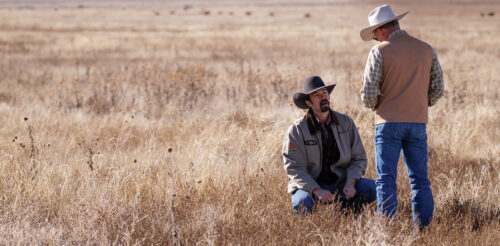
A: It means starting with real questions from producers and testing solutions at the scale they operate. Noble’s 13,500 acres serve as a living laboratory where we can measure productivity, soil health, biodiversity and resilience under real-world conditions. That connection between research and adoption is essential.
Q: Will collaboration extend beyond Noble’s ranches?
A: Yes. Our ranches will remain central, but we are also interested in developing collaborations that will complement and strengthen Noble’s research mission. We are currently developing proposals in partnership with other organizations. The roadmap will also be intended to serve as a guide for future collaborations and a tool to identify funding opportunities aligned with our science-driven priorities.
Q: How will you measure success?
A: There are two main measures. The first is whether our work leads to tangible actions that deliver real benefits for producers. The second is the strength of our scientific contributions demonstrated through peer-reviewed publications, recognition within the scientific community and leadership in regenerative agriculture research. We can, and must, be producer-relevant and scientifically strong at the same time.
Q: Why should ranchers and industry leaders be excited?
A: Because the plan is centered on producer needs. Science continues to be the cornerstone of our mission, but we also want to ensure our efforts enhance the well-being of producers. Grazing lands cover approximately 40% of the nation’s land area, 654 million acres. We want to be an unbiased voice promoting grazing lands as multifunctional systems that deliver a wide range of ecological, economic and societal benefits extending beyond food production. Well-managed grazing lands can balance production and conservation — storing carbon, regulating water and supporting wildlife — but most of these benefits are often overlooked by society.
Q: Why is it important to communicate beyond producers?
A: There is a lot of misinformation about agriculture in general. Scientific evidence is often less attention-grabbing than biased or sensationalized media. We are committed to unbiased, rigorous science and to sharing it transparently. Clear communication helps policymakers and the public understand the true benefits of grazing lands and the stewardship producers provide every day.
Q: What challenges or opportunities do you see early on?
A: I am new to Oklahoma, so I am still learning about the state’s beef industry and building relationships. Many of our research goals require multidisciplinary teams, which takes time to establish but will ultimately make our work stronger.
Q: How will your research connect with Noble’s educational programs?
A: Directly. As new results come in, we will integrate them into our courses so producers have access to the most current and practical information. That quick connection between research and education is one of Noble’s greatest strengths.
Q: Will you work only with regenerative producers?
A: No. We want to work with any producer who is willing to improve, whether they consider themselves regenerative or conventional. Labels are not important. What matters is a willingness to test and adopt better practices supported by data.
Q: Where do you see promise with new technology?
A: There is great potential in tools such as virtual fencing and other emerging technologies. We will test these technologies objectively to assess their impact on animal welfare, economic feasibility and environmental outcomes. That work will involve cross-disciplinary collaboration to ensure the results are practical and relevant for producers.
Q: What are your personal priorities as you lead the research team?
A: I want to keep Noble’s research tightly aligned with producer needs and to support the professional growth of our team. My focus has shifted from mentoring graduate students to mentoring professionals. Helping them strengthen their skills or pursue advanced degrees helps the entire team succeed.
Q: How would you summarize the roadmap in one sentence?
A: Use rigorous and unbiased science to help producers steward grazing lands so they remain productive, resilient and profitable for generations to come.
Maddy Bezner
Maddy Bezner, Sr. Content Writer
Maddy Bezner is a senior content writer for Noble Research Institute. She grew up in the Texas panhandle as the fifth generation of her family’s farming and cattle feeding business before earning her bachelor’s degree in agricultural communications from Texas A&M University. Maddy’s experience spans marketing and communications within the agricultural commodity and food and beverage industries.