
Soil Health
Healthy soil drives forage productivity, water retention and profitability. Soil health is the foundation of regenerative land management, and an indicator of successful grazing and rest cycles.
Achieving soil health is more about measuring improvement, rather than seeking perfection. Every ranch’s context is different, but there is always a way to improve your soil health and, with it, your ranch’s resilience.
Regenerative farmers and ranchers apply the six soil health principles within the context of introduced and native forage production in pasture and rangeland. As their soils regenerate, they see improvements in their soil carbon, water intake and storage, forage and livestock production outcomes, and profits.
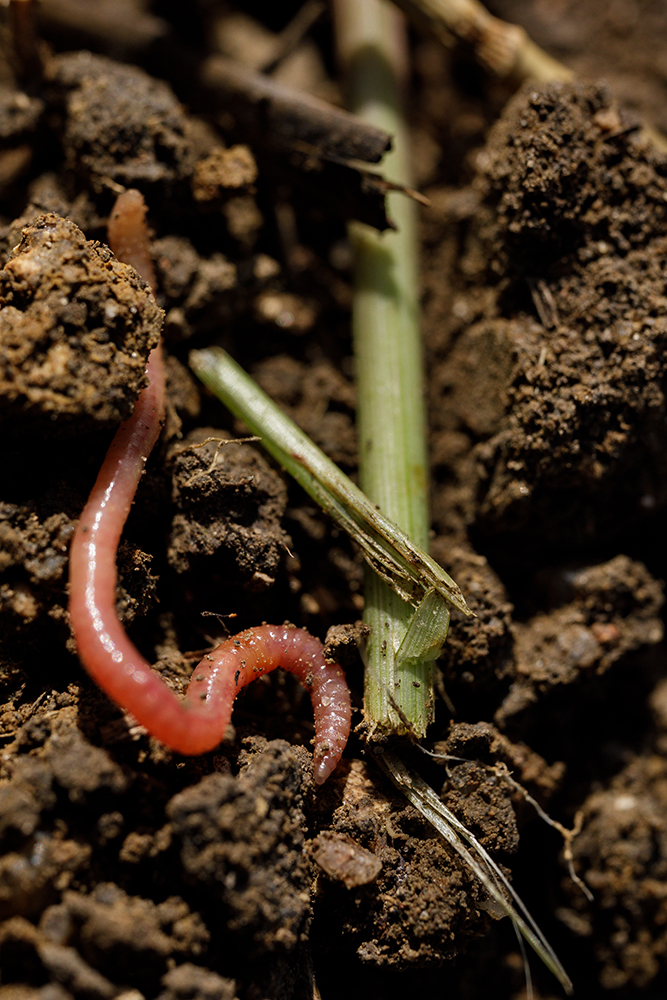
What makes soil health essential?
A rancher must think of soil, plants, animals, air, water and themselves as parts of one interconnected system that serves as the foundation for their operation. While every decision affects the whole enterprise and not just the individual pieces, it all starts with soil health.
The principles of regenerative management ultimately build soil and organic matter, which in turn makes the land more resilient.
Healthy soil…
- is more drought-tolerant, ensuring that water remains available for cover crops and grasses to flourish during periods of inconsistent precipitation.
- supports improved water quality in ponds, creeks and streams.
- helps keep ranches profitable through decreased use of chemical inputs while maintaining, or often increasing, grazing capacity.
When the soil is healthy, forages, livestock and ranchers can thrive.
The Six Soil Health Principles and Their Impact
The soil health principles are the same whether in crops or pastures for cattle and other livestock, gardening or forestry. However, how farmers and ranchers apply them changes with the context of how the land is being used.
The six soil health principles are:

Know your context.
Know your individual situation, including your climate, geography, resources, skills, family dynamics and goals.

Cover the soil.
Soil health cannot be built if the soil is uncovered or is moving. Using a diversity of plants and leaving the proper amount of forage residue minimizes bare ground and builds soil organic matter.

Minimize soil disturbance.
Mechanical soil disturbance, such as tillage, alters the structure of the soil and limits biological activity. If the goal is to build healthy, functional soil systems, tillage should be limited and only used in specific circumstances.

Increase diversity.
Increasing plant diversity creates an enabling environment and catalyst for a diverse underground community.

Maintain continuous living plants/roots.
Maintaining actively growing living plant roots is encouraged to keep the soil biology processes working, no matter the season.

Integrate livestock.
Research, practical application and common sense tell us the same thing: livestock are a necessity for healthy soils and ecosystems. The Great Plains evolved under the presence of animals and grazing pressure.
Signs of Healthy Soil
Visible signs of ecological health — such as plant diversity and fast water infiltration — can tell farmers and ranchers a lot about what’s happening beneath the surface. Whether it’s through the health of forage, how long water puddles last after rain or the variety of plant species you see across your pastures, the clues are there.
Visual signs of healthy soil can be found by looking at the four basic ecosystem processes: water cycle, mineral cycle, energy cycle and plant biodiversity. In your pasture, that may look like tracking live canopy cover, plant community composition, evidence of earth worm activity, litter and dung decomposition, erosion and soil crusting.
Healthy soil is teeming with life. Microbes — tiny living organisms like bacteria and fungi — play a vital role in breaking down organic matter, releasing nutrients and supporting plant growth.
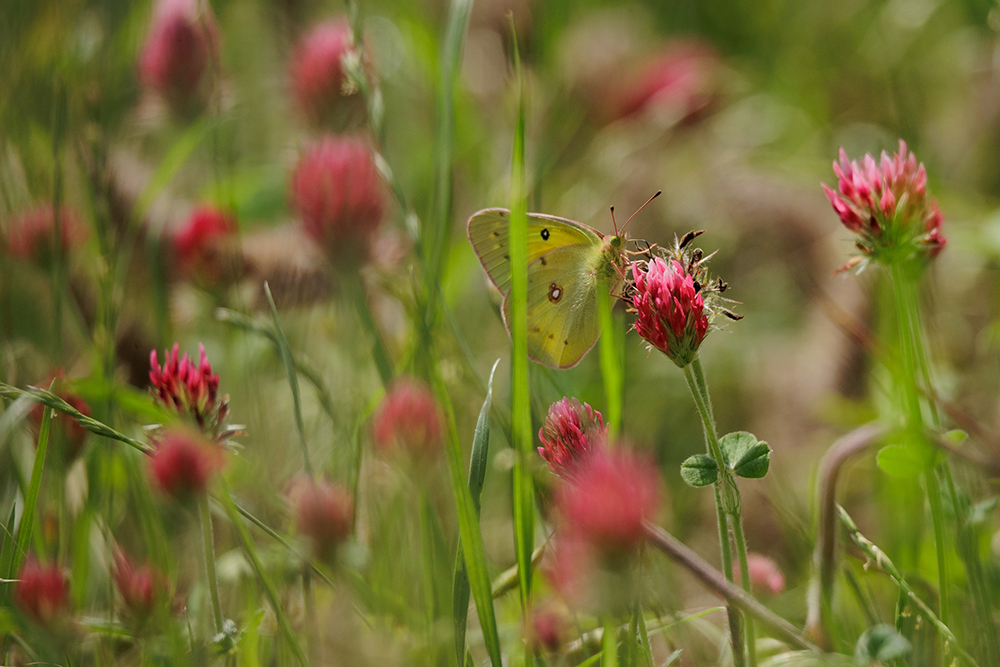
Plant diversity is a strong predictor of microbial activity. Soils from fields with a variety of grasses, legumes and broadleaf plants have higher levels of organic carbon and microbial biomass. Different plants support different microbes and, together, they build a stronger soil community. Diverse plant roots also feed soil life more evenly over the year, to better protect against erosion and help soils hold more water than monocultures do.
Infiltration rates also predict healthy soil. One of the simplest field tests — watching how quickly water soaks into the soil — turns out to be one of the most reliable indicators of soil health. Fast infiltration rates can be linked to higher microbial activity and more available carbon in the soil. That’s because well-structured soils, rich in organic matter and teeming with roots, have better pore space for water and air.
What is soil biology?
Soil hosts a vibrant ecosystem of living organisms. Buzzwords from high school biology class, like bacteria, fungi, protozoa, arthropods and even earthworms, are the key players in healthy soil. Management can either feed the ecosystem or starve it.
Soil biology is essential to:
- Decomposition of organic matter and materials
- Nutrient cycling
- Soil aggregation
- Nutrient availability
- Water dynamics
The Impact of Livestock on Soil Health
While repeated, unchecked soil disruption goes against the third soil health principle to “minimize soil disturbance,” disrupting the soil in strategic and natural ways can positively benefit both a ranch’s productivity and the environment.
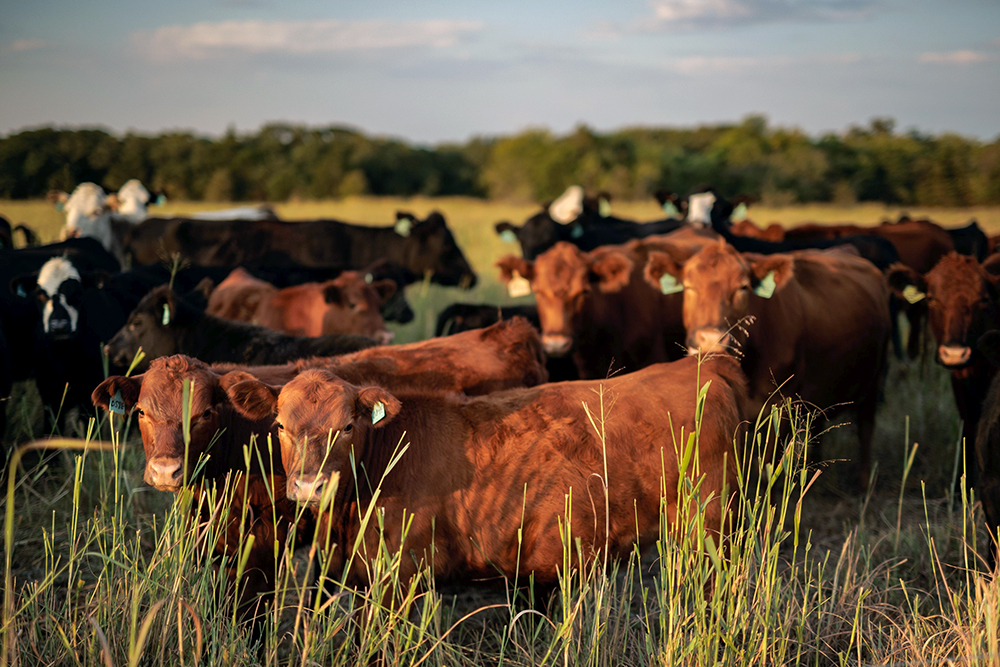
The Great Plains evolved under the presence of animals and grazing pressure. Soil and plant health is improved by proper adaptive grazing of one or more animal species, which recycles nutrients, reduces plant selectivity and increases plant diversity.
When ranchers place heightened emphasis on stocking rate and adaptive grazing, livestock can be used as a tool to improve soil health. This requires careful evaluation of the land and livestock on a frequent basis to determine the correct rate and necessary adjustments. This type of management is often referred to as adaptive grazing or adaptive multi-paddock (AMP) grazing.
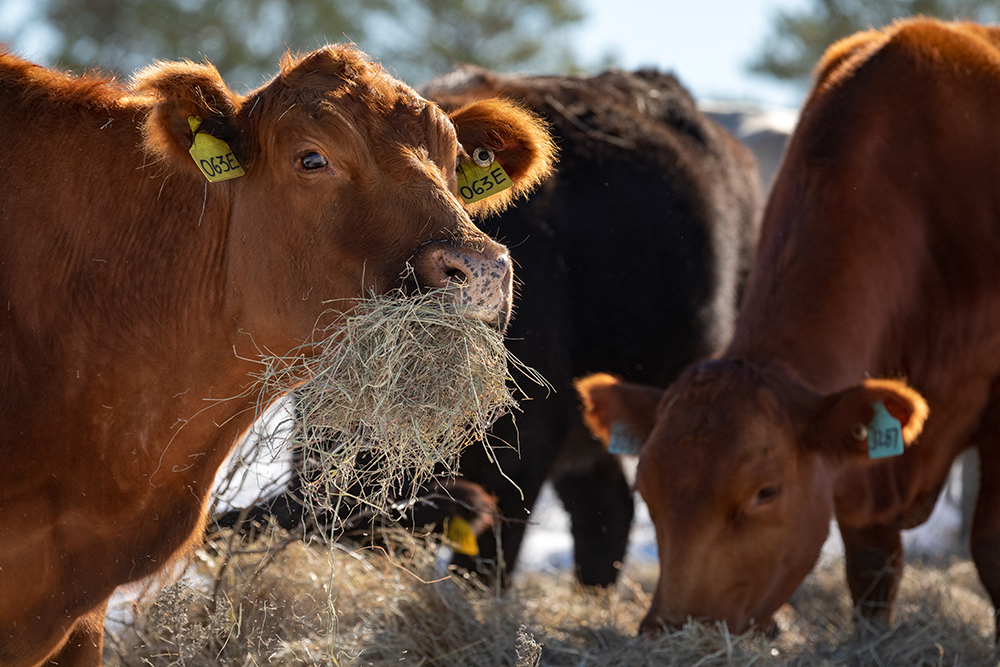
Building Soil Health With Bale Grazing
Regenerative management focuses on working with nature to improve soil health, rather than relying on inputs. One often overlooked tool to build soil health is bale grazing in the field. Hay feeding can be a useful strategy, especially if you’re trying to rebuild soil health in extremely deficient areas.
To maximize impact, pre-identify locations where bale grazing can do the most good for your soil health and forage production in your grazing plan. Then, if and when inclement weather or other factors call for hay feeding, you’ll know your spots in advance and can even pre-place the bales and fence them off until needed.
First Steps to Building Soil Health
There’s no prescription to follow in regenerative ranching or soil health. Every rancher will evaluate the six soil health principles and take stock of their own land. But there are a few helpful pieces of advice for ranchers just getting started down the road to healthier soil.

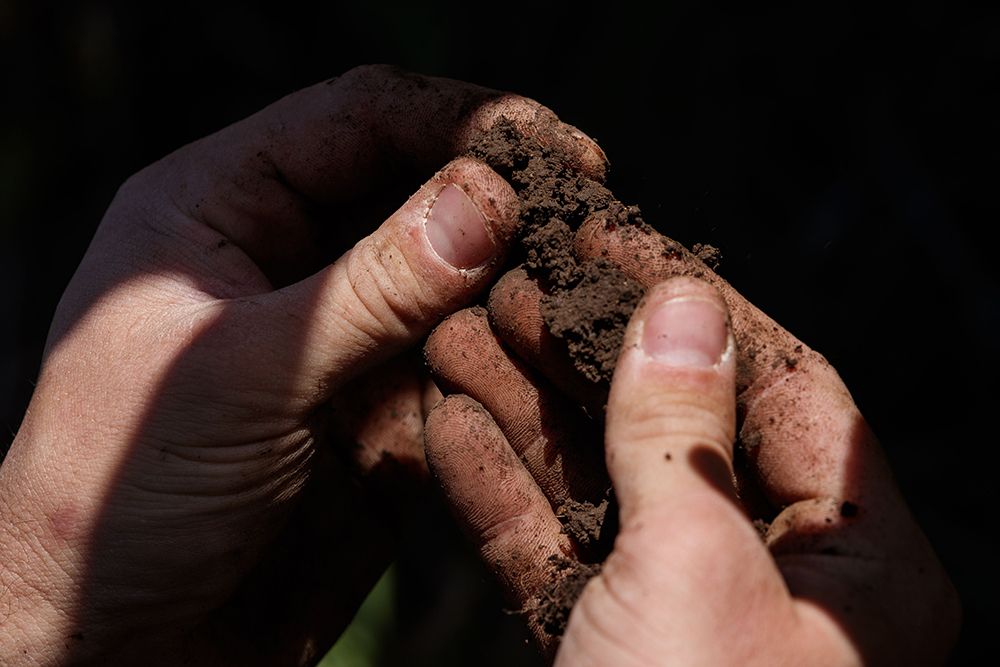
Go beneath the surface. Grab a shovel and dig into your soil. Write down the date, location, current conditions and what you see, smell and feel. Keep track of any management changes and how they impact these characteristics of your soil.

Consider a biological soil test. Observation can tell you a lot about your land, but a biological test goes beyond basics and evaluates how biologically active the soil is. The two most popular biological tests are the Haney and PLFA tests.

Consider a biological soil test. Observation can tell you a lot about your land, but a biological test goes beyond basics and evaluates how biologically active the soil is. The two most popular biological tests are the Haney and PLFA tests.

Integrate livestock adaptively. Start small, experiment with what works and see how you can use what you have to build fences and provide water access before spending money on equipment.

Open your mind to new ideas. It’s easy to get stuck in a box when it comes to land management. Continue to do things the way you know how. Search your smartphone for useful apps to aid in plant identification, quantifying plant diversity or calculating the carrying capacity of a pasture. Search for other ranchers who share a similar environment and seek out new ideas and demonstrations you can customize to your land and objectives.
Noble’s Soil Health Research: Metrics, Management and Monitoring
Through a five-year collaborative research project, Metrics, Management and Monitoring (3M), Noble will seek to quantify rancher’s field observations of soil health improvements. The project will uncover how management decisions on pasture and rangeland are interconnected to the overall health of the ecosystem. This will allow producers to make informed decisions to benefit their operations, while improving the overall health of their land for the betterment of society.
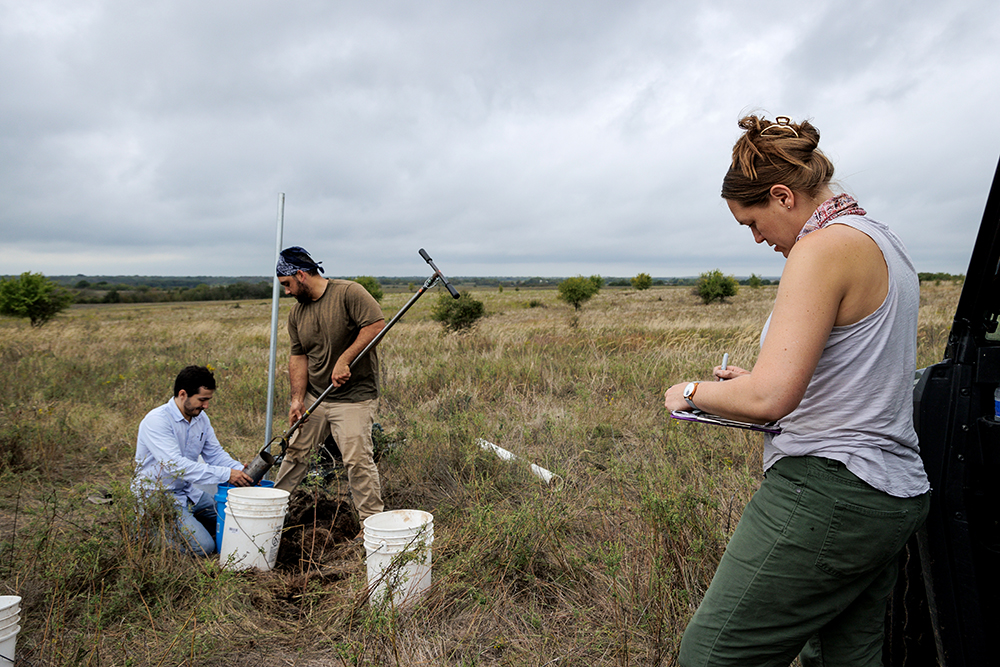
The 3M project connects researchers and producers in five states to better:
- Quantify soil health metrics for grazing land environments and link remote sensing capabilities.
- Determine how farmers’ and ranchers’ management practices impact soil health and carbon sequestration in pasture and rangeland.
- Understand the relationship between grazing management and socio-economic well-being and resilience in rural U.S.
To see progress so far, visit our research webpage: noble.org/research/3m/
Noble Research Institute is committed to creating healthy and resilient grasslands, providing clean air, clean water, and healthy land, and it all starts with the soil.