
Seasonal food plots are often used to attract wildlife like White-tailed deer or Bobwhite quail. But what if you could turn your entire ranch into a year-round food and habitat source for wildlife?
Whether for personal recreation or as an enterprise, the key to attracting wildlife is to manage your land to support their needs and plan for all the animals – wild and domesticated – your land supports.
Balancing Livestock and Wildlife Needs
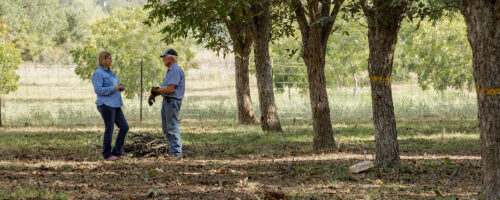
Food plots established around hunting seasons attract wildlife seasonally, but for true enthusiasts like Will Moseley, there’s a better approach. He’s a hunter and regenerative ranching advisor at Noble Research Institute, specializing in wildlife and rangeland ecology.
“These animals have to live on the landscape 365 days a year,” says Will Moseley, making the point that seasonal plots aren’t enough if you want your land to be a year-round destination for wildlife.
“Everyone wants to focus on food. But that’s just one thing,” says Moseley. “They need water, shelter, space, and more importantly, the arrangement of those components has to be right.”
Sitting at the crossroads of wildlife and ranching helps Moseley see things differently. The principles and mindset that regenerative ranchers use to build healthy soil and improve forage production can also be leveraged to attract wildlife for personal enjoyment, family hunting or a supplemental enterprise.
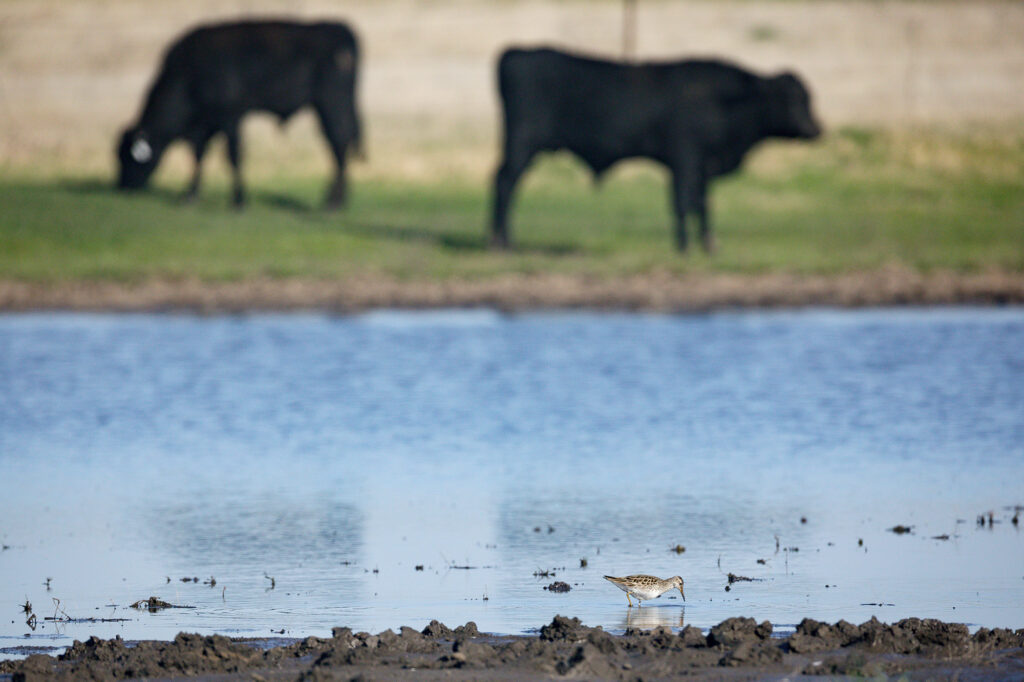
Manage for What you Want on your Ranch
Through courses and consulting, Moseley tries to help landowners start managing their land for what they do want, rather than focusing on what they don’t want to see.
It’s often our instinct to cultivate a “clean” looking forage base and remove all woody species. But a critical component of ecosystem health is diversity. Moseley says deer, quail and other desirable wildlife seek out diverse grasses, forbs and woody species for food, nesting grounds and shelter. This kind of plant diversity also benefits livestock health, making it a win-win for ranchers.
“A lot of times livestock they are seeking out these forbs as well for nutritional value. Some of these forbs have a high protein content. And a lot of them have secondary compounds that animals use for self-medication. So we want that diversity because that makes for healthier livestock.”
While ranch owners may be hesitant to encourage woody plant development, Moseley’s advice is to find the right balance.
“The goal is not to let woody plants cross over a certain threshold,” he says. But Moseley insists that having some woody plants in your pasture is important for wildlife and has other benefits. “Woody plants are an ecological functional group and they’re important for soil health and wildlife habitat.”
In the spirit of seeing the good through the brush, Moseley shares some advice for attracting White tail deer, Bobwhite Quail and desirable pollinators.
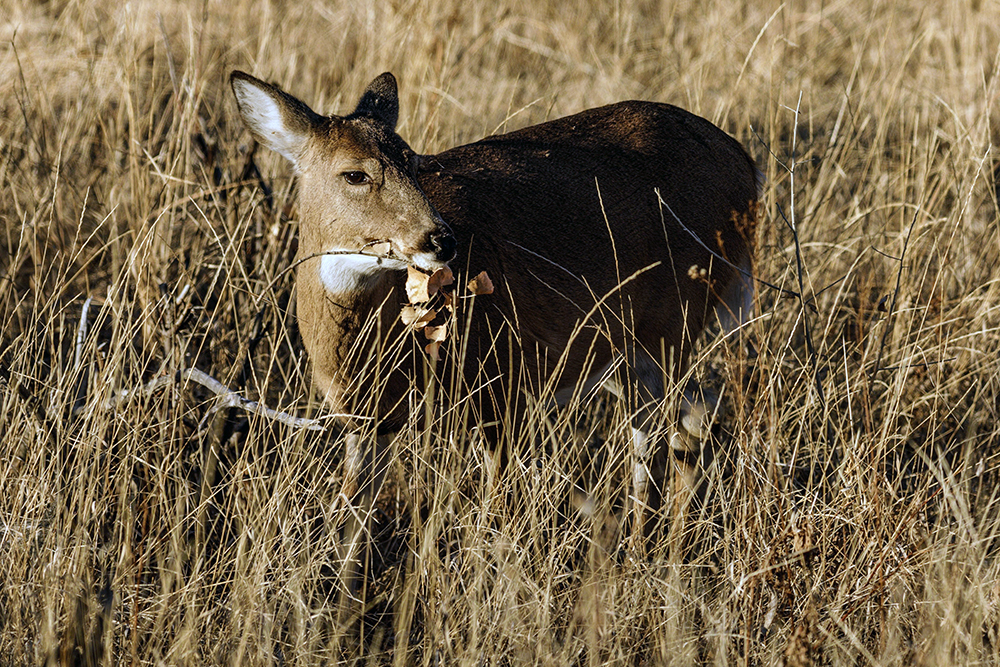
White Tail Deer
“For deer, we need woody plants and forbs to eat, water sources and then cover,” says Moseley. Deer consume most of their calories in the form of forbs and woody plants. Grasses make up a tiny portion of their diet, and usually only during winter in the southern Great Plains when nothing else is green. Adding cover crops to your management, such as a mix of cool-season annuals, would support deer browsing habits through the fall and spring.
“The more cover you have, that’s more habitat, that more it can support more white-tailed deer. So trees aren’t necessarily bad,” says Moseley. Distribution of cover across your property is also a key component to accommodating healthy deer populations.
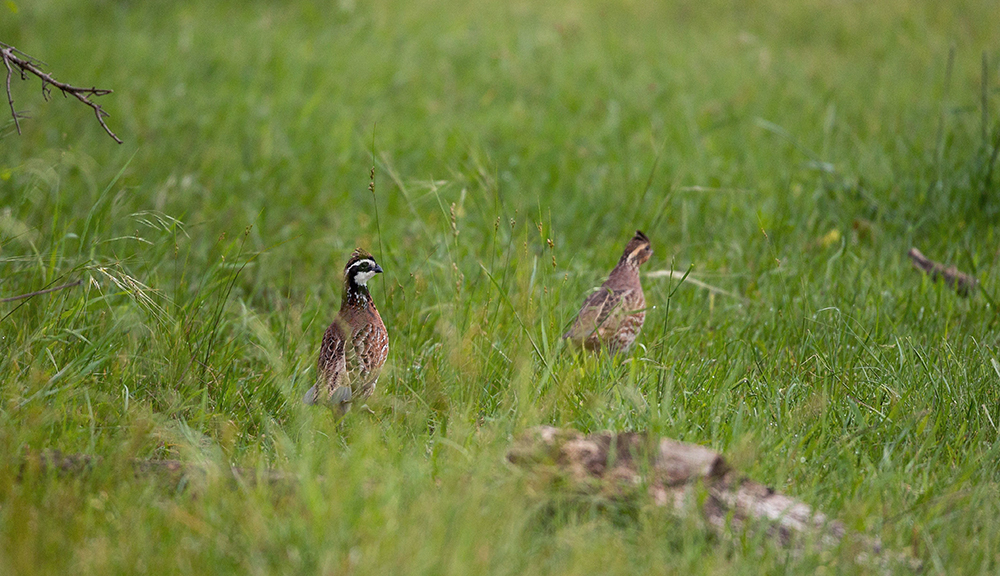
Bobwhite Quail
“Their food, when they’re young, is insects,” says Moseley. “Young Bobwhites eat a lot of insects.” They are also seed eaters. Which makes a mix of forbs, grasses and flowering plants that attract insects essential.
But the type of grass is important for another reason, Moseley explains. “A major part of their habitat requirements is for their nesting cover. They prefer to nest in bunch grasses. A native perennial like Little bluestem is a perfect example,” he says.
Bobwhite quail need enough plant growth to hide their nests, making them sensitive to overgrazed pastures. Moseley notes that landowners must plan if they want Bobwhite quail nests on their land. “You have to plan your winter grazing around leaving enough of last year’s growth to hold over for Bobwhites to nest in this year.”
Bobwhite quail are also sensitive to fluctuations in rainfall. “They are such a boom-and-bust species. They boom during rainy years and bust during drought years,” Moseley says. His solution is to incorporate as much diversity as possible to bolster soil health and ecosystem resilience.
“The more diversity, the more availability you have. That just equals better performance from your wildlife species, better populations and better population dynamics,” says Moseley.
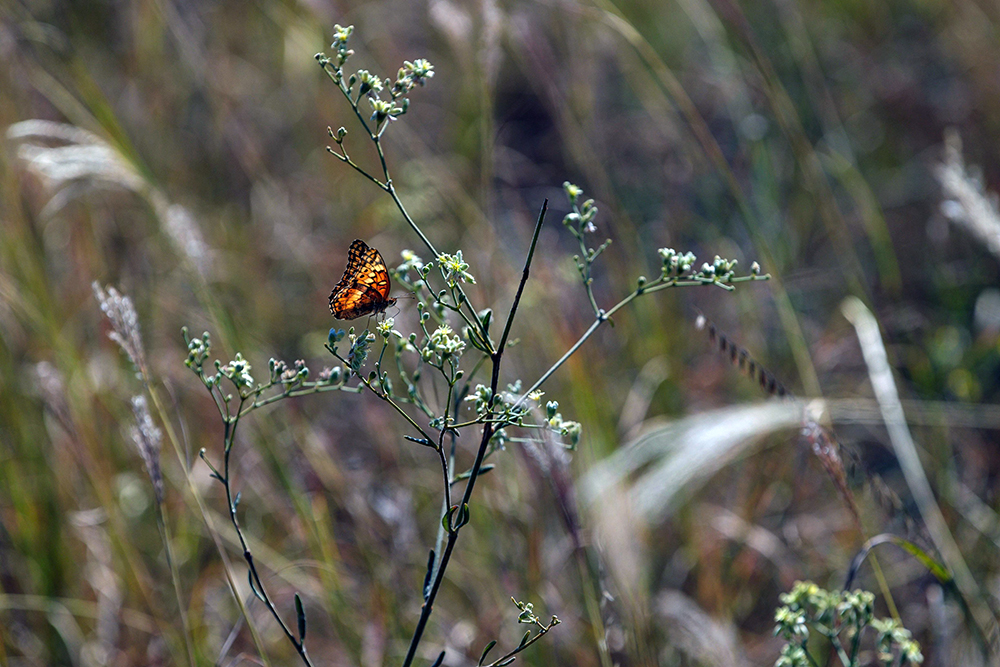
Pollinators and Butterflies
Pollinators are desirable for their role in plant reproduction on a ranch. But they also contribute to a growing “non-consumptive” ecotourism economy built on the binoculars of the insect-curious.
“Butterflies and pollinators essentially want flowering plants that produce nectar,” says Moseley. Wildflower season comes to mind in the spring and early summer. But the popular Monarch butterfly migrates south, across the Great Plains in the fall and they need a viable food source.
“We have to consider our grazing management across the year, so we have flowering plants available.” Through grazing management decisions, like not spraying herbicides, establishing different grazing schemes or changing the timing of prescribed burns, landowners can awaken the diverse seedbed that lies dormant in their soil.
One way Noble’s ranches have improved plant diversity is by adjusting their typical prescribed burning schedule.
“We typically do our burns in February or March, which gets a certain plant community response. We experimented with delaying and doing growing-season fires in the summertime.” That simple change in timing helped reset the plant communities on the landscape. After the growing season burn, plants started to reflower in late summer and fall.
When wildlife becomes part of the way you manage a ranch, it’s an opportunity for an enterprise you could sell or something to bring family home, says Moseley of his personal experience. “That’s good for family relations and keeping the generations tied to the land.”

Laura Brenner
Laura Brenner, Sr. Content Writer
Laura Brenner is a senior content writer for Noble Research Institute. She’s worked in agricultural communications for over a decade, specializing in nonprofit communications and storytelling. Laura earned a bachelor’s degree from Penn State University and a master’s degree from Purdue University. She resides near her hometown of Lancaster County in south-central Pennsylvania.
Comment