
Everything on the ranch has a risk-reward or cost-benefit balance. Many cattle ranchers may view adding small ruminants as too risky. But regenerative-minded ranchers can glean big benefits to their soil health and forage capacity by adding a sheep or goat enterprise.
Ranchers considering adding a small ruminant species – like sheep or goats – to their cattle operation have probably heard rumors about what to expect. Noble’s general ranch manager, Joe Pokay, believes the benefits outweigh the challenges. There are a few things ranchers should thoughtfully consider before loading up their trailers.
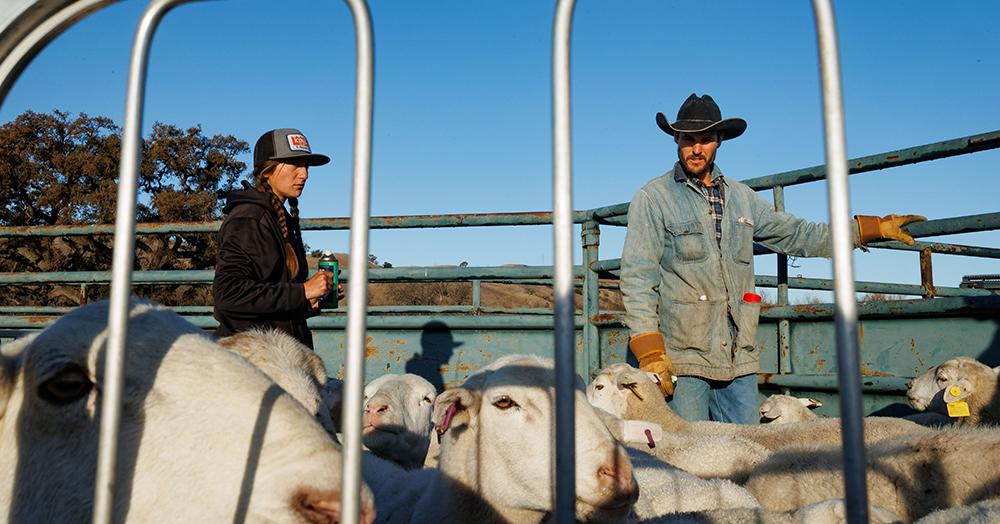
Adding Sheep to Noble’s Cattle Ranches
Pokay’s been a cattleman his whole career, but on Noble’s ranches, he’s seen the cost-benefit analysis written across the forages and pastures across the organization’s 13,500 acres of working land.
“What we’ve been saying is, sheep and goats make good cow pasture and cows make good sheep and goat pasture. Anecdotally, the grass is better behind where the goats are because the sheep and goats clean up a lot of the things that the cows don’t necessarily want to eat. And then the cows eat what the sheep don’t want to eat.”
The benefits are evident today, but in Pokay’s first year at Noble, he learned hard lessons about managing sheep and goats in cold wet weather. A cold rain can overstress the small bodies of lambs and kids. So Pokay had to recalibrate the breeding season.
“We manage our kidding and our lambing season to be in the summer, when the deer have babies, because it’s better weather for them,” says Pokay. He knows ranchers who have a barn or other structure that allows them to successfully lamb or kid in the spring while keeping the animals dry and warmer. Pokay insists any ranch can benefit from species diversity. But ranchers have to keep their resources and context in mind and be willing to adapt to the needs of the new species.
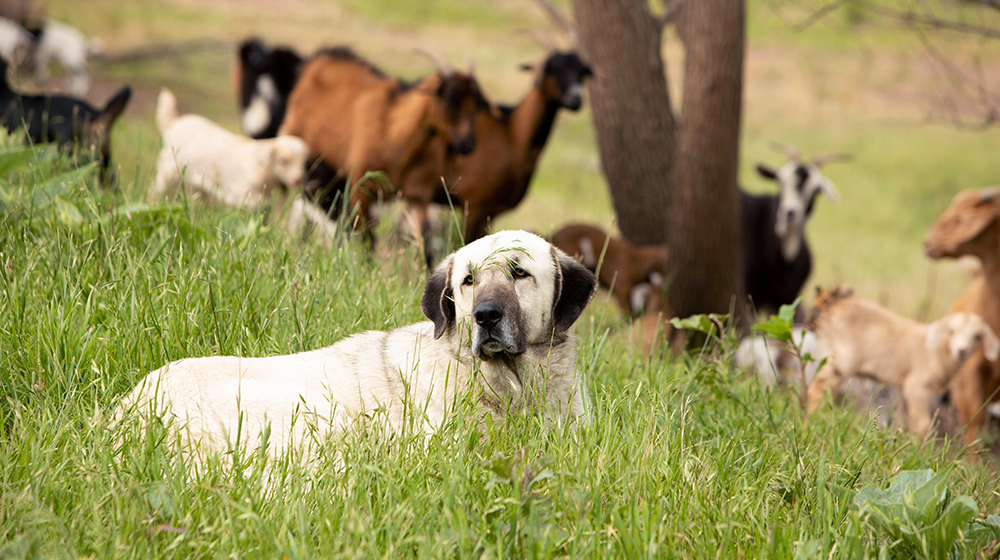
What to Consider When Adding Small Ruminants
- Risk Tolerance and Mindset
Any change involves some risk. Pokay likens the mindset needed for multi-species grazing to that of automated driving directions. “If you miss your turn, your navigation app doesn’t say ‘you made a mistake, go home,’ right? It just says, ‘recalculating,’” explains Pokay. When one plan doesn’t work, recalculate the next best option. - Remember the 3 Ps: Perimeter Fence, Parasites and Predators
The “3 Ps” highlight where ranchers should focus their attention with small ruminants. Goats aren’t as slippery as some ranchers may think, but good fences still make good neighbors. “We’ve trained sheep to a single strand of hot wire and goats to two strands,” says Pokay. “You can do it without having a super expensive, fancy fence. But you need to have somewhere with a good fence so you can train them to an electric fence, just like a cow.”
Parasites aren’t unique to small ruminants, but unlike cows, sheep and goats are sensitive to them. “Their bodies aren’t as big, so if they get a load of parasites, it doesn’t take very much for those to kill them.” He recommends a strong rotational grazing strategy to limit exposure, or a deworming protocol if regular movement isn’t possible.
Another area where stature creates a challenge is in protection from predators. While guardian dogs are a helpful tool, they’re not the only way to keep smaller livestock safe. “If we’re having a problem, we might make a small pen and put them up at night. That way if we don’t have dogs, we don’t have to worry about it or, if we do have dogs and they’re having a hard time, then at least it gives the dogs a smaller area to protect,” Pokay says. - Production Schedule
Pokay’s biggest piece of advice is to have a plan for how you want to manage and market your small ruminants. “I always think about the time of the year and what I want my production schedule to be. If I’m going to buy something new, I want probably 60 or 90 days of them like getting used to me and me getting used to them before I try to start breeding them,” says Pokay. He admits it’s not the quickest way to make money, but it saves some headaches in the long run.
“The seasonality of sheep and goat marking is a real thing to consider,” explains Pokay. “A lot of it is tied to ethnic, religious holidays that consume different classes of sheep and goats.” This isn’t dissimilar to the seasonality in cattle markets, but the ebbs and flows are different and should be well understood before diving in. - Network with ranchers doing it
Without the help of a mentor, Pokay insists he wouldn’t be as well-positioned as he is today. “I think it really helps to have a mentor. People in the sheep and goat world – and I think it’s the same with regenerative – have already weathered the coffee shop talking. I think there’s an attitude in that industry that’s like, ‘hey, we know this is good and if you’re interested in it, I’m going to help you figure it out.”
Connecting with a reputable producer can help fast-track your understanding of how to make sheep or goats work for your operation.
“There’s definitely a learning curve doing something new,” says Pokay. “A sheep and a goat aren’t necessarily just a small cow. They have their own requirements managers should know to increase your odds of success with them.”

Laura Brenner
Laura Brenner, Sr. Content Writer
Laura Brenner is a senior content writer for Noble Research Institute. She’s worked in agricultural communications for over a decade, specializing in nonprofit communications and storytelling. Laura earned a bachelor’s degree from Penn State University and a master’s degree from Purdue University. She resides near her hometown of Lancaster County in south-central Pennsylvania.
Comment
Leave a Reply
4 comment on: "What to Know When Adding Small Ruminants to Your Cattle Operation""
Brian Payne
March 17, 2026I had the good sense and opportunity to visit Zane Manley in Ardmore, Oklahoma to see in person the impact that goats can have. I am glad that I did! Canadian cattle ranchers need the kind of articles like this to give them some confidence in multi-species grazing.
Dr. Nar Gurung
March 18, 2026As an animal scientist, I find the content on this site very valuable and would love to subscribe for regular access to such useful information
Noble Research Institute
March 18, 2026That is great to hear! You can subscribe here to receive articles like this straight to your inbox: https://www.noble.org/noble-subscriptions/#noble
Greg Swob
March 18, 2026With some ranches and farmland being used for solar panels today, Sheep grazing beneath/around them might be a good idea. Goats will eat the wiring and climb all over the panels, so I say – sheep for mowing maintenance.