The Importance of Profitability for Regenerative Agriculture
Decades of lived experience inform Teichert's advice for regenerative ranchers who understand that to be sustainable, ranches must be profitable.
In my mind, profitability is foundational to regenerative agriculture. You can look at that two ways: 1) The journey toward regenerative agriculture usually begins with doing something that costs money. If you are not profitable, do you have the money to start? 2) If the practices you adopt are truly regenerative, you will be able to cut costs and increase income, thus increasing profitability.
The problem comes in making that first cash outlay and trusting that it will all work as planned. For a grazier moving to regenerative management, your first expenditure will typically be for stock water development or fence — or a combination of the two. After making a mindset shift and getting the calving season right, many ranchers find enough ways to reduce or eliminate expenditures to pay for the first installment of fence and/or stock water.
While not wanting to offend anyone, I will suggest that the reason many ranches are not profitable is because the owner/manager doesn’t know how. Paradigm lockdown often gets in the way of profitability. Ranchers are not intellectually deficient, nor do they intentionally lose money. Most have simply tried to become more profitable by doing the same old things a little better.
For nearly 70 years, the value of our product has risen more slowly than the cost of equipment, fuel and the inputs many of us have come to depend on. We must reduce our dependence on those inputs and replace it with a system that is much more dependent on soil health, rainfall, sunlight and our ingenuity.
Most of us have had to learn or need to learn what I call the “Major Determinants of Profit.” Note that weaning weight is not on this list, because increased weight comes with a cost that often does not result in increased profitability.
My list of major determinants can be found on the following two pages.
Enterprise Mix and Choices.
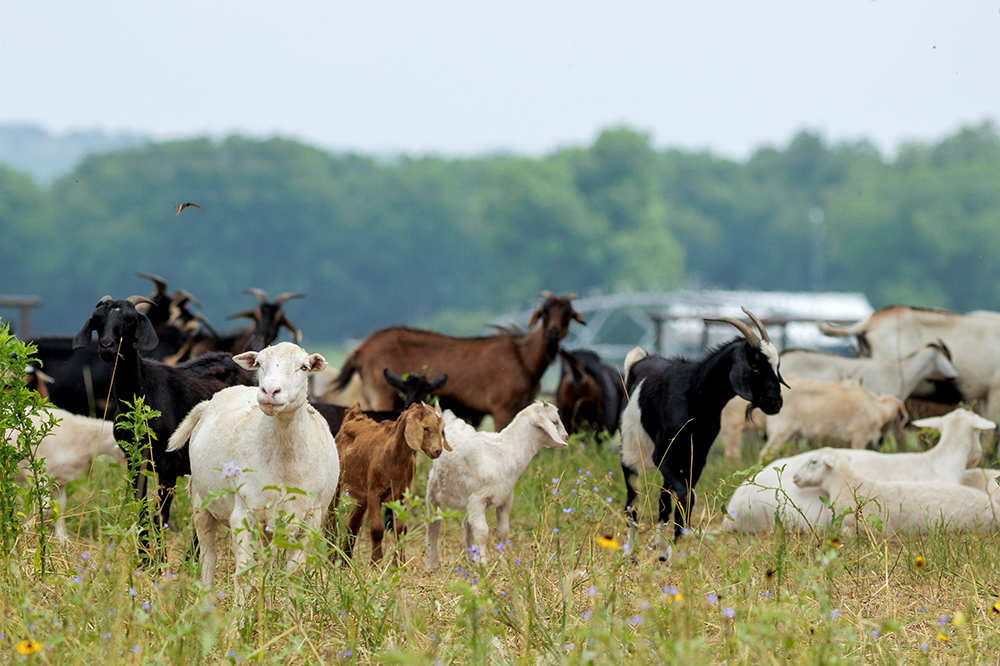
The choice of enterprise(s) is extremely important to profitability. Sheep and goats might be more profitable than cattle. Stockers might be more profitable than cow/calf. Terminal cow/calf (buying pregnant cows, not bred heifers, and selling all the calves) is always more profitable than maternal cow/calf (raising and developing your own replacement heifers), unless you can develop heifers at a low cost and then sell bred cows for a good premium.
Overhead.
The ranches that improve their profitability the fastest are those that make big reductions in overhead costs: 1) land and the things attached to it; and 2) people and the tools and equipment used to do their job. Obviously we need overhead, but many ranches have more, even much more, than they need. Those ranches that rigorously attack overhead expense make big changes in profitability quickly.
Stocking Rate.
Make sure your stocking rate stays safely within your carrying capacity. Factors to consider include:
- Cow Size and Milk Production. If you have smaller cows giving less milk, you will always wean more pounds per acre and will sell those pounds for a higher price.
- Soil Health — Grazing and Pasture Management. Grazing management may be the biggest hitter on this list. I know a number of ranchers who have doubled (and even more than doubled) their stocking rate with little addition to overhead by increasing forage amounts and grazeable acres. Think of the economic power of that.
Fed Feed Versus Grazed Feed.
Almost any time you can replace a day of feeding with a day of grazing, you have just improved your profit. Many successful ranchers are grazing all year long with no hay feeding at all.
Calving Season.
The choice of a calving season is very important to reducing or eliminating hay feeding. It is also helpful to reduce calving-time labor and to avoid the need for calving facilities — let them calve in the pastures.
Realized Herd Fertility.
The ideal would be that, every year, every cow produces a calf that will become an animal to sell. That perfection will never happen, but with cattle adapted to your management and environment, you can do very well. Every cow that fails to raise a calf is a big drain on profitability.
Wise Input Use for Optimum Production.
My rule of thumb — always expect the input to produce at least $2 of revenue for every $1 you spend on the input. Why? Because we might have estimated incorrectly, or what if the price of the input increases and our cattle have become dependent on the input for good production?

Marketing.
While I don’t have space here to make a list of market options, let me suggest that there are many more options for selling our products than one might think. Here are just a few: Keep and expose all of your heifer calves for a short period of time. Keep and calve those that are pregnant. Then sell a lot of bred cows. Keep all steer calves and run as yearlings except on the drought years. Sell your meat directly to customers.
The ranking of this list of determinants will vary from one ranch to another, but they are all important. If you can spend time working on them, you will improve profitability — sometimes quickly and sometimes over time.
Then recognize that combining grazing management, adapted cows and the right calving season will have positive effects on soil health, carrying capacity, fed feed vs. grazed feed, overhead costs (especially labor and facilities) and herd fertility. And these are all big drivers of profitability.
To summarize the key points — reduce overhead, achieve excellent herd fertility and market well. Then strive to improve three key ratios: acres per cow, cows per full-time equivalent of labor and fed feed vs. grazed feed.
Burke Teichert
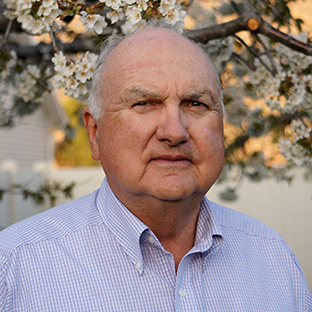
Burke Teichert, Senior Partner, Understanding Ag
Burke Teichert has a combined 40 years of ranching experience, including managing multiple large ranches in the United States, Canada and Argentina. He is a former operations vice president of AgReserves Inc., commonly known as “Deseret Ranches.” Since retiring in 2010, Teichert has worked as a contract manager, consultant and speaker.