
As producers, we know that to succeed, we must keep a close eye on all our enterprises, whether our pastures, livestock, or crops. As managers, we look for a problem and start thinking about how we want to treat what we see. But have you ever stopped to think about what is causing the symptoms to occur? If we all just slowed down for a moment and observed what was happening around the area of the symptoms, we could identify some of the root causes of the problems we are experiencing.
As producers, we have been conditioned to look for the symptoms and typically will have a plan of action on hand to address these symptoms. Usually, this plan treats the symptoms we are seeing and will involve a chemical, fertilizer, or some other type of input. Seldom does the cost of the chosen treatment cross our minds because we know that if we do nothing, the symptoms will get worse. But by treating the symptoms, all that we do is put a band-aid on the real problem. If we could step back for a moment and honestly evaluate what was going on, we could identify what was causing the problem or why the problem existed. If we determine what was causing the problem, we may have a different plan of action to correct the problem. How do we do this? First, we must be in a mindset that allows us to evaluate what is happening around us and be willing to see what is occurring, not just what we see. We will see things differently with this mindset and not just look for symptoms.
In pecan orchards, we can observe some common causes of problems reasonably quickly, but as producers, we typically overlook them. Let’s think about the issues that may occur in overcrowded orchards. When orchards are overcrowded, we limit sunlight penetration through the trees and onto the soil surface. There are several things that this problem can cause. First off, it can significantly restrict crop production. We must remember that to produce pecans, we must have sunlight, and if we are limiting the sunlight within the canopy of the tree, the only production that will occur will be limited to the areas of the canopy that are receiving the sunlight (typically the top of the tree). Suppose we are in a region that has problems with scab or other foliar diseases. In that case, an overcrowded orchard limits the airflow in the orchard, increasing humidity and causing the leaves and nuts to have free moisture on them longer. This increases the likelihood of disease infections and increases the spread of diseases. Lack of sunlight penetrating the soil surface will limit forage growth under the trees. When forages are limited, erosion can occur. On top of increased erosion, we will impact the soil structure, which can lead to issues with additional water runoff, water pooling on the soil surface, and soil compaction. Having forages (any plants) growing under the trees will benefit the soil structure, helping to protect the soil surface. The roots of these plants help loosen up the soil and increase water infiltration. Suppose we have a diverse plant community growing. In that case, it can also help increase the soil health and soil microbes that are in the soil, helping with higher water holding capacity, more water absorption following a rainfall or an irrigation event, and increasing the nutrients in the soil. These are just a few of the problems that overcrowded orchards can cause. As a grower, if we have these problems, instead of treating the symptoms (scab, erosion, water pooling on the soil surface, droughty soils, etc.), if we address the real problem – an overcrowded orchard, we can alleviate some of these problems.
The problems associated with overcrowded orchards are just one example of how you could evaluate what is causing your problems/symptoms in your orchard. Several other examples could be discussed. However, the key point I hope you get out of this article is to start looking at your operation differently. Do more than just look for the symptoms and automatically reach for the treatments you typically use. Evaluate your situation and try to determine the root cause of your problem and address that to solve your problem. Remember that your situation may differ from other producers because of your location, soil type, health of your soil, or other factors that may not be visible to you. In the long run, this will be less costly and help increase your success and profitability. So, I would challenge you as a producer to change your mindset when you see problems in your orchard and evaluate why that problem is occurring.
*This article was first published in the January 2025 issue of Pecan South Magazine.
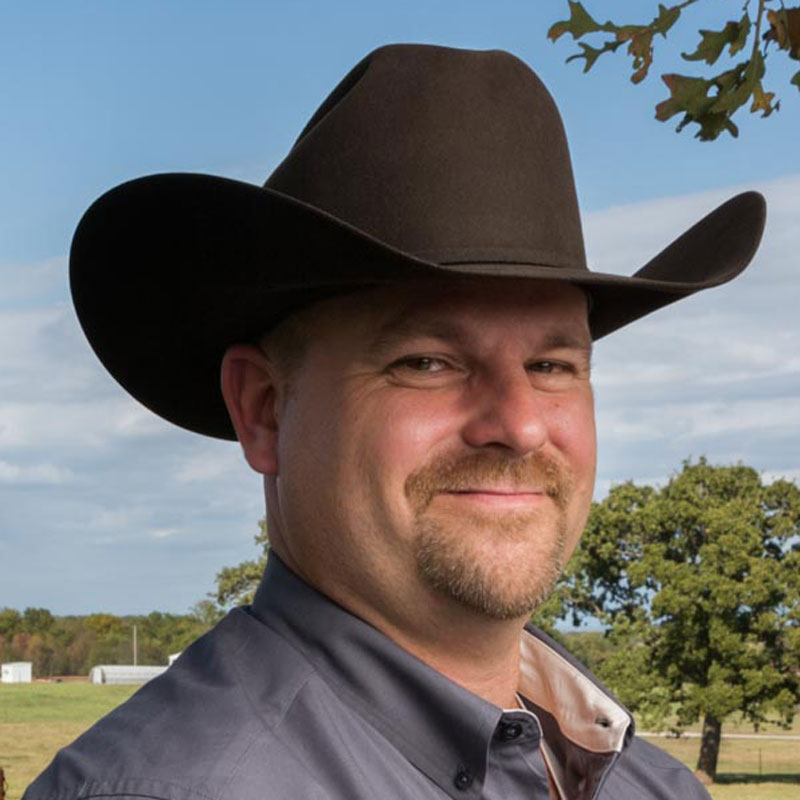
Charles Rohla, Ph.D.
Charles Rohla, Ph.D., serves as a Sr. Regenerative Ranching Advisor at Noble Research Institute. He joined Noble in 2006. He is actively involved with several state and national pecan and agriculture organizations. He has a bachelor’s degree in animal science, a master’s degree in agricultural education and a Ph.D. in crop science from Oklahoma State University.
Comment