
Livestock Can Be Used to Optimize Disturbance for Soil Health — Here’s How
Weigh the pros and cons of livestock as a tool for soil disturbance on your ranch, and then put the animals to work.
Soil disturbance doesn’t have to be a dramatic event.
Caitlin Word, a livestock consultant for Noble Research Institute, says producers should minimize disturbances that are not intentionally planned for ecosystem improvements and optimize those disturbances that will have positive benefits to the whole ecosystem.
“These ecosystems developed with disturbance from bison and other wildlife grazing, but also fire, people, predators, floods,” Word says. “One isn’t better or worse than another, it all depends on how it’s utilized.”
She encourages stewards to remember that anything beyond absolute rest can be considered a disturbance, and that disturbance is, by definition, intermittent. This can help them weigh the pros and cons of using livestock to optimize disturbance for soil health, she says.
Here are some of the major pros and cons to consider:
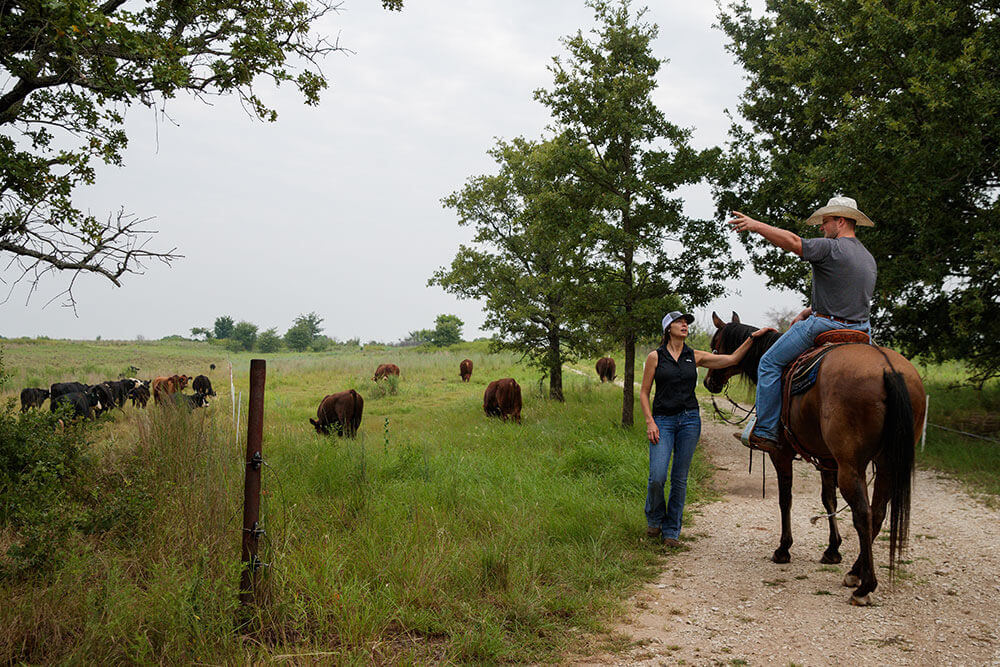
Pro: Biology grows biology
“Whenever you have livestock grazing, you have all sorts of biological responses taking place,” Word says. “Every time they lay a manure pat down, graze a plant or lay down some thatching with their hooves, they’re encouraging complex biological responses.”
Perhaps more than any other form of disturbance, the complex interactions between plants, animals and soil microbes during grazing offers opportunities for optimization.
Even when an intense grazing event may at first seem too disruptive – Word points to high-traffic areas near stock tanks or mineral supplementation – the key to turning it into a valuable disturbance is to evaluate what the animals took and what they left behind.
“You might have a lot of soil disturbance there, but you also got a lot of hoof action and a lot of fertilizer put down,” she says. “If you continue to disturb that area the same way over and over again, it will be a detriment. But, if you give it truly adequate time to respond to that disturbance and to recover, a lot of times, that biology will get to work and help that area come back thicker, more lush.”
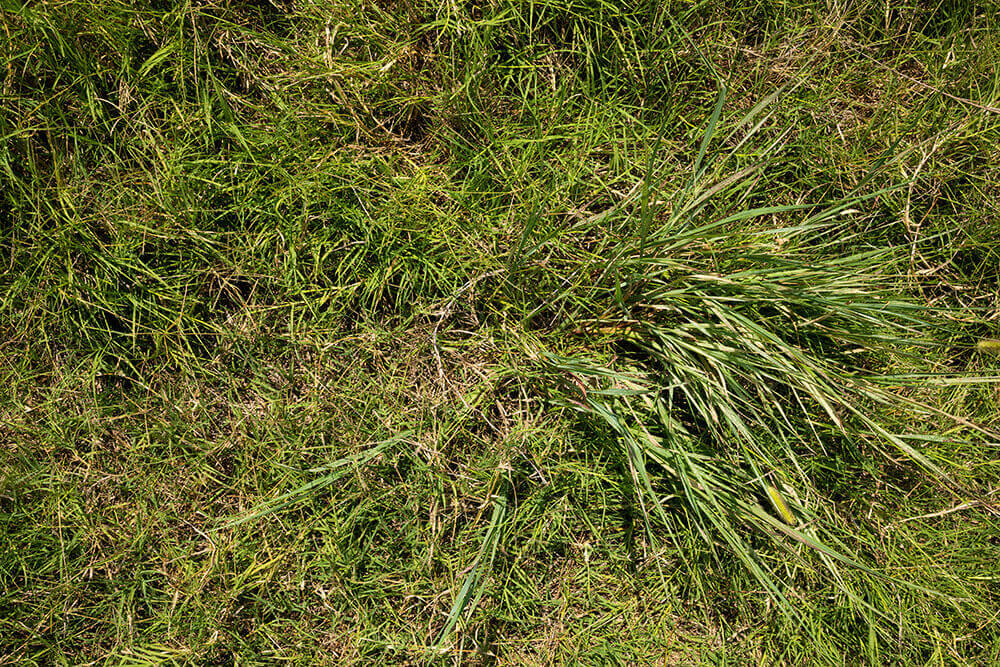
Pro: Diversity creates diversity
Using livestock as a tool for soil disturbance directly connects to grazing management principles of timing, intensity, frequency and duration.
“If you’re having the same soil disturbance in the same area, at the same time of year, every single year, that consistency can kill,” Word says. Instead, she recommends adding diversity to the livestock’s timing, intensity, frequency and duration of disturbance to open opportunities for plants and biological responses to flourish.
The goal of a positive disturbance keeps diversity intact and prevents the negative succession that can occur in an untouched system. Part of achieving that goal includes evaluating the type of livestock you use.
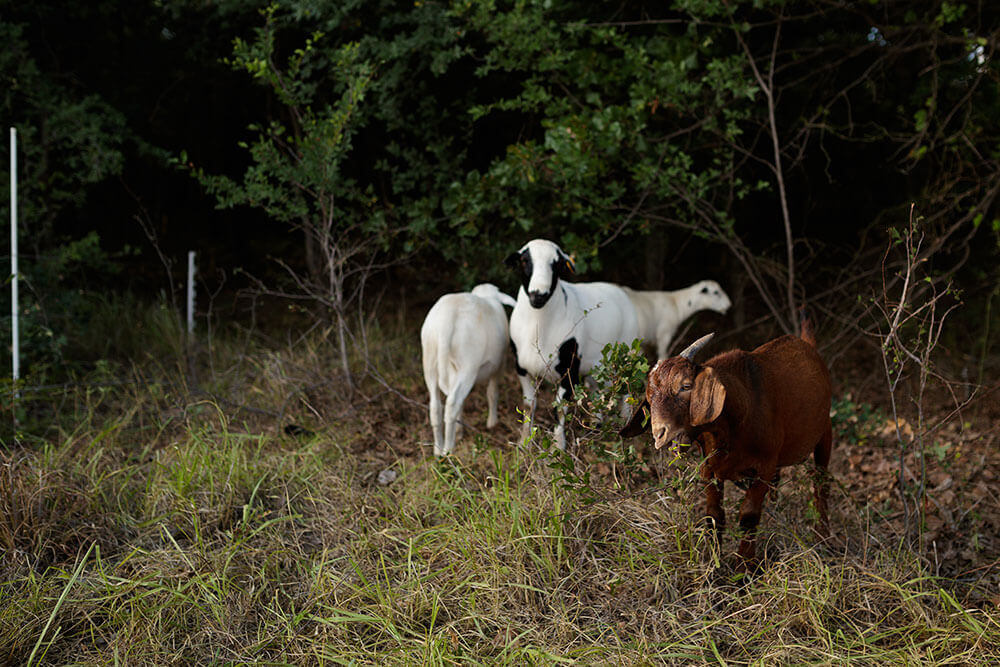
Cattle might be the right answer if you’re looking for larger hoof action to lay down decedent or past-prime growth, but goats will be better suited to disturb a natural succession toward woody species. Sheep bring different grazing patterns to the table, and each livestock class must be evaluated with your goals in mind.
Con: Complex systems require complex thinking
While complexity is the greatest asset of optimizing livestock-induced disturbance, it also can be the biggest challenge.
“As managers, we often make decisions around that timing, intensity, frequency and duration to make things more convenient for us,” Word says. “But that’s not very convenient for the ecosystem.”
Attention and observation are required in order to succeed in maintaining complex and diverse systems. Unlike when they use mechanical or chemical disturbances, stewards must balance the needs of the land with the needs of their living tools – their animals – and tend to the nutrition and health of both land and livestock.
If you’re trying hard to change management styles or make big changes to your landscape, you’re likely going to need to do some genetic culling of animals that just aren’t suited for your new goals, Word says.
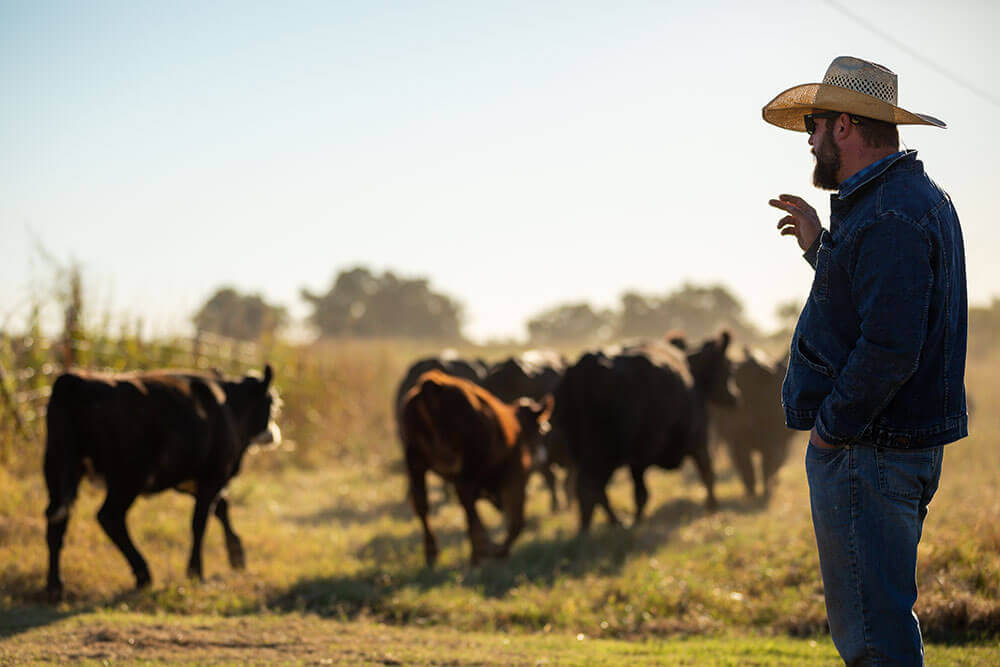
How to cut drama from disturbance
The bottom line in using livestock as a tool for optimal soil disturbance is to start with a specific end in mind, Word says.
“If you know your goal is to use hoof impact to lay down thatch, set a specific goal for forage utilization that says, for example, you want to utilize 25% for consumption and another 25% to armor the soil,” she says. Calculate grazing time, intensity, duration and frequency to get there.
Then, check the results of your livestock’s disturbance work against the other principles for soil health – diversity, context, cover and continuous living roots, and adjust accordingly.
“When most people hear about soil disturbance via livestock, they think compaction,” Word says.
That is a reality in some settings, she points out. But more often than not, the compaction is the result of too much bare ground or pasture that has not been managed with the other soil health principles in mind.
Looking at livestock as tools for optimal disturbance, used in sync with all six soil health principles, is a reminder that disturbance doesn’t have to be dramatic or harmful, Word says.
“It really can be a tool of finesse.”

Laura Nelson
Laura Nelson, Content Writer
Comment