
Turning Family Values Into Profit
The seventh generation on Withers Ranch in Paisley, Oregon, continues the legacy of careful land management in their fragile, arid ecosystem while finding buy-in to reshape the family's philosophy on recordkeeping and profitability tracking.
At the end of a long day cutting and raking hay in Oregon’s high desert region, cowboys and ranch hands run some numbers in their heads and pencil them down on a scrap of paper or a well-used NCBA Redbook, if they have one.
Withers Ranch grows and harvests hay to feed its cattle over the winter. And the Withers family relies on a cadre of local help to get the job done. They use the same crew year after year to harvest the hay, so their full-time ranch staff can continue to care for and move cattle on other parts of the ranch.
But the end of the day doesn’t mean the end of work for everyone. Colleen Withers still needs to track down all of those paper scraps and Redbooks to record hours and keep track of the season’s hay harvest.
Colleen and her husband, Matt, are the seventh generation on the ranch. Like many up-and-comers, they’re looking to make a few changes to the operation. Making their own hay is the way the Withers family has always done things. But they’ve never tracked expenses closely enough to know the profitability of the endeavor.
“There are some years where [making hay] probably pays great because we raised so much hay,” says Colleen. “Then there are some years, like probably this type of year, where it won’t pay because we’re going to hire the same amount of people and run the same equipment for not very much hay.”
Keeping track of expenses and income is a challenge on many ranches. Ranching, consulting for a local watershed council and raising kids don’t leave Colleen with much time to do more than get bills paid. While there never seems to be a right time, a strong market and a mindset shift are shaping a new approach to help Colleen pin down profitability on the Withers Ranch.
High Desert Ranching
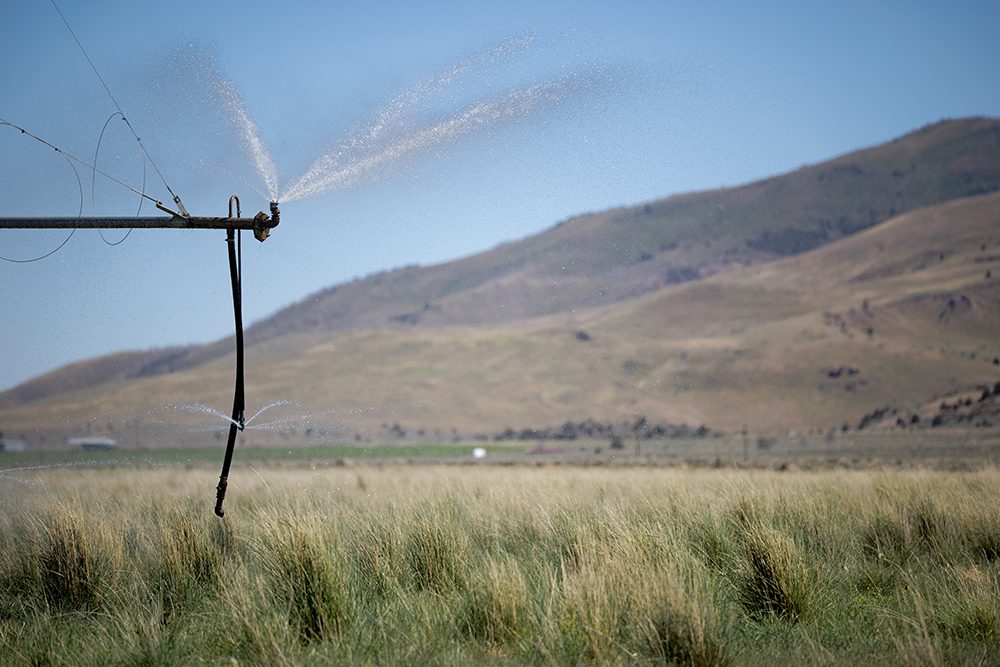
Six generations before Colleen and Matt, the Withers family found themselves feeling crowded out of Oregon’s Willamette Valley, west of the Cascade Mountains. The family moved eastward in search of more space. In the early 1870s, the Withers built a homestead in an arid, high desert region of Oregon known today as Lake County.
Lake County sits on 8,275 square miles of high desert. The area receives a precious 8 to 11 inches of annual rainfall. The resulting landscape is arid and full of perennial bunchgrasses and sagebrush desert, dotted with saline terminal lakes. Learning to be a good steward of the land in Lake County is a means of survival, not a management choice.
“It’s average soil and really low rainfall,” Colleen says, summarizing the conditions. “So that limits you agriculturally. And really, what this area grows in abundance is grass. That’s why we say a lot that we’re not really cattle ranchers — we’re stewards of grass.”
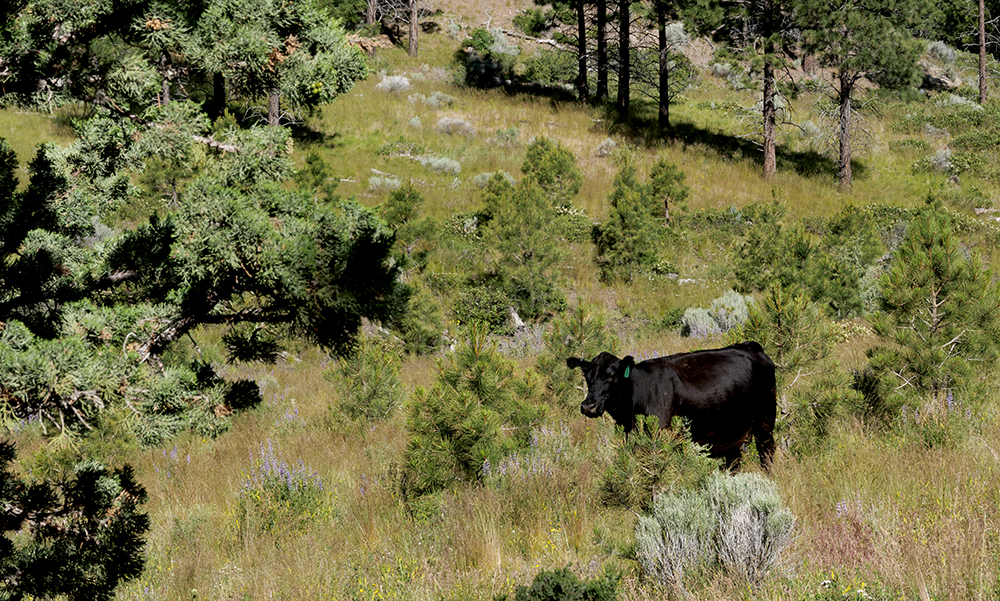
The Withers family, and others like them in Lake County, discovered that ruminant animals are the best way to turn those grasses into something profitable. “The Withers family, like a lot of ranching families around here, started with sheep and then made the transition to cattle,” explains Colleen. “Back then, it was the long-legged Herefords that everybody was running. We made the jump to Black Angus cattle somewhere along the lines, and that’s what we run today.”
To meet their nutritional needs, the cattle on Withers Ranch require a fair amount of grazing land. A staggering 78% of that land is owned by the federal or state government. Which means the Withers family relies heavily on public lands grazing for their operation’s stability.
“Proper management of the resources has been at the forefront, initially out of necessity,” Colleen says of the family’s land management philosophy. “If you wanted to survive, you needed to take care of the grass so it grows back differently every year. And if you abuse the grass, it’s going to struggle the next year. I think that’s something that was easily recognizable by anyone in this basin.”
Modern-day science offers terminology and rationale for the generations-old management wisdom the Withers family relies on. And as the first generation on the ranch to have reasonably high-speed internet, Colleen and Matt have instant access to information about improving their soil, educational workshops and funding programs.
Reframing Ranch Goals
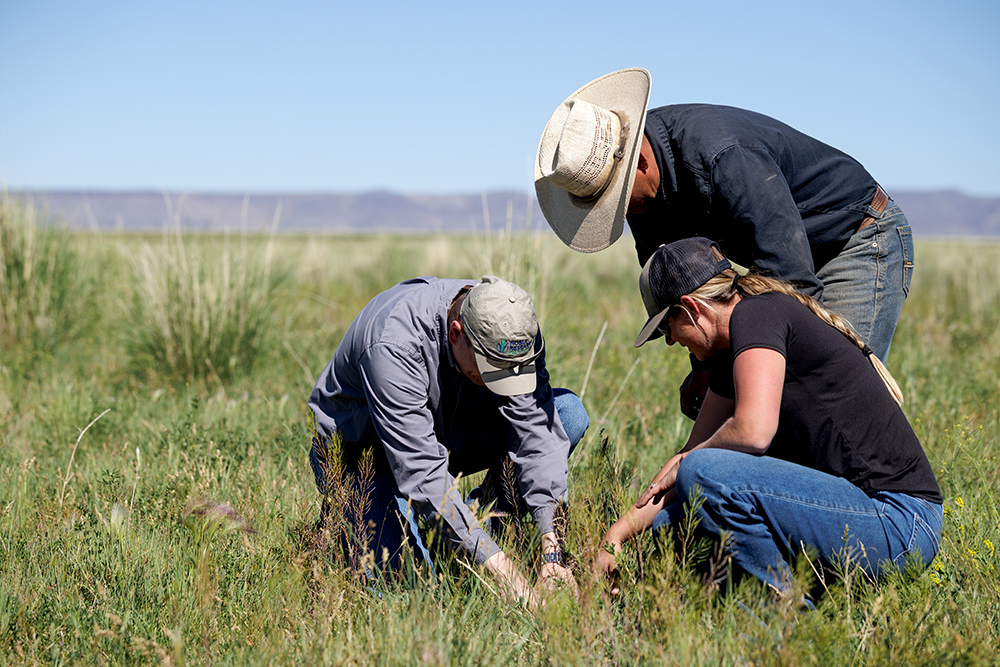
Four generations of Withers live and work on the ranch today. Alan Withers — or Grandpa Alan, as Colleen refers to him — is 96. He’s the fifth generation and lucky enough to see his 5-year-old great-granddaughter develop a sense of the family business.
Dan and Betty Withers, Matt’s parents, are the sixth generation of Withers on the ranch. All three grandparents have established, or perhaps perpetuate, a family and ranch culture that encourages the next generation to thoughtfully make the ranch work for them.
As someone who married into the Withers family, Colleen’s always been struck by the progressive mindset toward change and generational transition.
“The Withers have just operated with such a level of respect and professionalism from day one,” says Colleen. “I think it’s just been the culture set by some previous leader in the family. The older generation is so great about, ‘Hey, this is going to be your guys’ deal. So, find out what works for you, and we’re going to support this.’”
Twenty-five years ago, Grandpa Alan made a decision that he hoped would change the future of the ranch — he enrolled it in a natural beef cooperative. Colleen says it was a way for the family to find stability in an otherwise volatile cattle market. They gained the ability to pre-negotiate beef prices, sometimes up to 18 months in advance.
Ranch profitability is always on the forefront of a rancher’s mind. But being able to track expenses and income to know for sure which years the ranch was in the black is a different story. Most ranchers don’t prefer to spend their evenings at a desk running numbers. But Colleen found she isn’t like most ranchers.
Fifteen years ago, Colleen started working with Dan on the accounting and financial side of the ranch. She fell in love with the work, seeing it as her way to contribute to the ranch’s success.
“When I first took over the books, I was so excited. I was like, ‘I am going to break out our fuel bill by each enterprise,’” recalls Colleen. “And I’m sure a lot of people do that. But I quickly realized it wasn’t sustainable for me. Sometimes you just have to shove bills out the door and just go log in to the bank account to make sure you have enough to cover them.”
But her goal to reorganize the books didn’t end there. It was simply lying in wait for the right opportunity.
Measuring Progress and Profitability
Over time, the Withers family realized an additional benefit of joining their beef cooperative — the educational opportunities that came with membership.
“Above all, the things we love the most about [the cooperative] are the people and the access to resources, like a Noble course. We keep track of what workshops are going on or what discounts we have as [cooperative] members,” says Colleen.
Access to informational resources from across the country can make a huge difference in ranch management. Especially for Colleen, who knows what she wants to do but needs support through the process.
In 2025, the time was right to dial in recordkeeping and expenses. The cattle market was, and is still, at an all-time high. While current consumer demand for beef is high, inventory is historically low. Colleen wants to make the best of a good situation.
Colleen and Matt attended the Noble Profitability Essentials course. It was Noble’s first visit to the Beaver State and Colleen’s first experience with Noble. She’d heard about the course through the beef cooperative. After a bit of internet sleuthing, she found Noble’s philosophies aligned with those of Withers Ranch.
“Noble really challenges ranchers to recognize that you can survive the tough times; you can thrive even in hard times,” says Colleen. “And that’s the direction we’re trying to go. I want to really have this dialed in. To make good decisions with the quality profit that hopefully a lot of ranchers are experiencing right now. Then look back on it and be really proud and think, ‘Oh, thank goodness we did that.’”
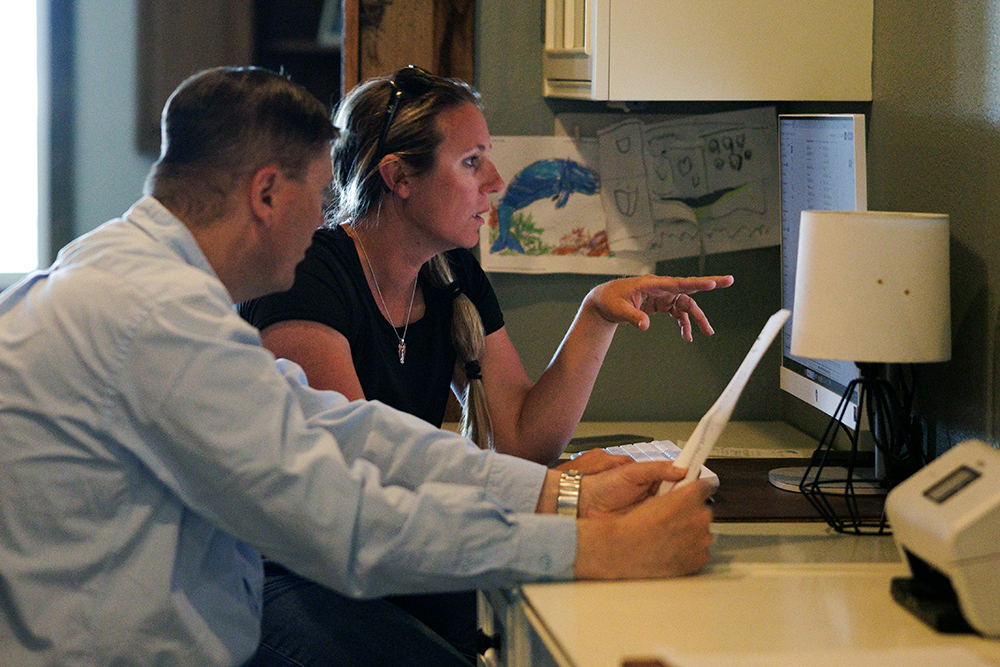
Colleen got started right away when she returned home after the course. Using her current accounting software, she set up a tagging system for bills.
“I’ve worked pretty hard to try to focus on the finances, but it still gets away from us at times,” Colleen admits. “That paradigm of prioritizing your recordkeeping and tracking and setting up sustainable systems that make it really easy to go peek at your profitability when it matters is key.”
She says it’s not perfect, but a step toward being able to track expenses and pull reports when needed.
To Make Hay, Or Not To Make Hay
The first place Colleen is prioritizing tracking expenses is this season’s hay enterprise. And she’s holding herself accountable for this goal with the help of Steven Smith, a consultant with Noble. The two connected at the Profitability course in Pendleton and continued working together during Colleen’s first consultation session, included with the cost of the course.
“We did a lot of hypothetical things in the course, then ultimately that one-on-one consultation with Steven, where we were working with our real numbers and our stuff and our unique situation and things like that, I just thought, ‘This is exactly what we’ve been needing,’” says Colleen.
This ranch-specific conversation helped Colleen get answers to some questions she had about profitability on the ranch. But it also helped her hold herself accountable for her recordkeeping goals and the smaller steps it would take to reach them.
“Steven and I go back and forth all the time about raising our own hay,” says Colleen. “That’s one thing that Noble really challenged us to do, is to look closely at our haying operation. What does it cost for us, as cattle ranchers, to put up our own hay.”
At the time, it was a question she didn’t have an answer to. But she worked with Smith to develop a plan of action. It included finding a way to track expenses by enterprise or even by activity, like making hay. Tracking payroll is Colleen’s biggest challenge. Collecting handwritten slips of paper from everyone can feel tedious. But, in the end, she feels it will be worth the effort.
“It’s probably the biggest challenge we had from Noble, and it’s been really eye-opening,” says Colleen. “The next time Steven asked me, ‘What’s your hay costing you?’ I didn’t have to spend four days trying to sleuth it out.”
With a new system in place this summer, Colleen is hopeful that she’ll have a much better idea of what hay really costs at Withers Ranch.
Colleen feels fortunate that she, Matt and their daughters get to work with family every day. She’s even more grateful for the long-standing Withers family legacy to leave the land, and the business, better.
Grandpa Alan, Dan and Betty place trust in the next generation when it comes to talking through changes on the ranch. Elder generations provide guidance and the wisdom of experience. They know it’s up to Colleen and Matt to maintain the integrity of Withers Ranch for their own children.
“Matt and I want to look back when we’re in our 60s and say, ‘Remember when we got $4 for these calves on the Western Video Market? And then remember when we took that money? That’s when we went to that Noble course and we started tracking things,’” says Colleen. “I want to look back on this time and realize that we did something really good with this good time because it probably won’t stay this way, and we know that.”
Laura Brenner
Laura Brenner, Sr. Content Writer
Laura Brenner is a senior content writer for Noble Research Institute. She’s worked in agricultural communications for over a decade, specializing in nonprofit communications and storytelling. Laura earned a bachelor’s degree from Penn State University and a master’s degree from Purdue University. She resides near her hometown of Lancaster County in south-central Pennsylvania.
Comment