
Finding Meaning After the Military
After military service, some veterans can feel lost without their tight-knit community and strict daily routines. These veterans traded military families for ranching families after discharge, and it's made all the difference in their transition back to civilian life.
An Army Ranger walks into a butcher shop and emerges as a Montana cowboy.
That’s not exactly how retired 3rd Ranger Battalion member Ben Minden would explain his transition. Though, he’d probably agree the punch line should include mention of a horse.
Raised in New Jersey, Minden attended West Point and entered the Army upon graduation. In the final years of his service, he was stationed at Fort Benning in Columbus, Georgia, when a successful deer hunting trip took him to a local butcher shop, Daffin’s Meat Processing. There he met Johnny Daffin, whose family owns the shop. Turns out, Johnny also raises and trains horses. Soon, southern pleasantries turned into an invitation.
“I had never really been around horses before,” says Minden. “I started riding horses with [Johnny] just because I wanted to try it, and I fell in love with it. I wanted to get more involved, so I started roping a little, then working on some other horse farms around there.”
Minden’s interest in horsemanship turned into a second career when he completed his military service. It also led him to start a nonprofit aimed at easing the transition for other veterans interested in pursuing ranching work.
Starting A New Chapter
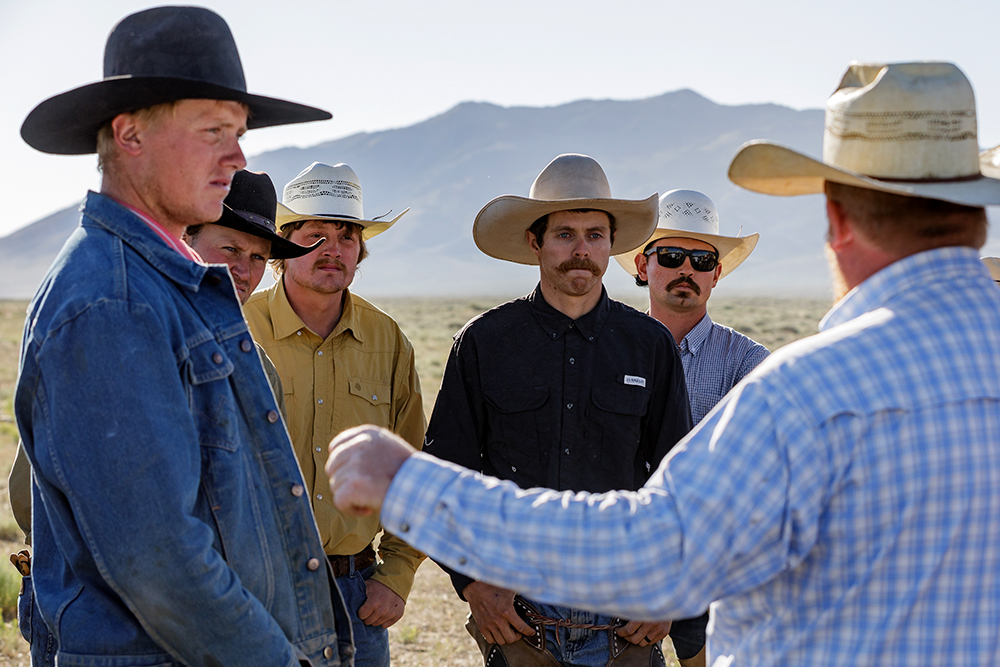
Minden’s interest in a more rural way of life didn’t sprout from just one encounter with a well-mannered horse. During basic training, Minden sparked a friendship with a fellow trainee that fed his interest in a change of pace after the military.
“His family was from Montana, so we came out to visit with them and fish a bunch of times,” recalls Minden. “Then, right when I got into the Army after West Point, I ended up buying a little piece of land in Montana. I just kind of knew I’d always want to be out this way.”
Having something to look forward to after discharge helped ease Minden’s return to civilian life — a process that can be difficult for many veterans to navigate.
“The actual transition of getting out of the military is super weird,” says Minden of his experience. Six months before your departure, you submit the proper paperwork. Then, on the day of discharge, you’re given a time and location to sign the binding document. “It’s just like a normal workday. You sign a piece of paper and it’s like, ‘OK, you’re no longer in the Army,’ and then you just leave and go home.”
At the time, Minden didn’t feel like he had a next chapter determined. Instead of a solid plan, he decided on a change of scenery.
“I finished on a Friday, loaded my horses up in a trailer, drove out to that piece of land that I bought in Montana and started building my house,” says Minden. “It was a little bit of a strange feeling for a week or two. I don’t have to cut my hair or be at work at 4:45 in the morning. But I didn’t feel like I was missing anything.”
Minden had buddies who were discharged before him who struggled to find meaning in work after the Army. “They end up just detesting it, just really missing the camaraderie and the physicality and getting to do something you think is important.”
While cowboying and working on family ranches, Minden found similarities to his time in the military — there was a tight-knit community, and the work was fulfilling. But he realized it wasn’t easy to break in and get experience as a kind of outsider, like he was.
“I was like, wow, it’s pretty tough to get into this cold turkey. Maybe I should set this deal up, this nonprofit that helps people who want to do what I did, but just do it a lot easier,” says Minden.
Finding Purpose Through Ranching
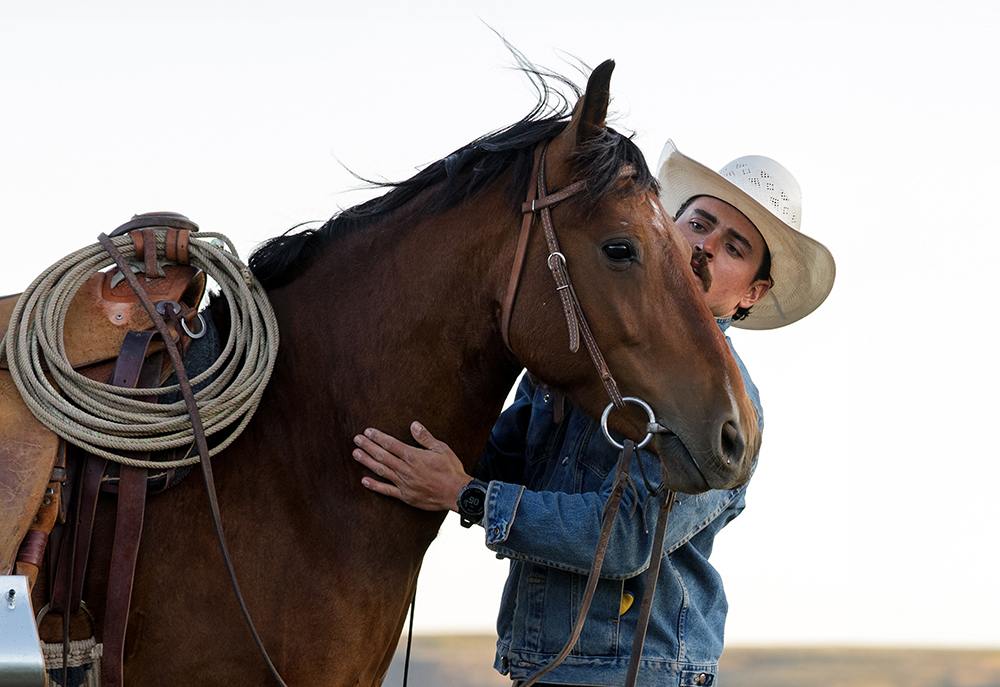
Minden founded Bear Hug Cattle Company in 2021. The nonprofit is based near Wilsall, Montana, 20 miles northeast of Bozeman. He started small with the resources he had available to him and the contacts he made along the way.
“When we first started, we didn’t have a place to stay. We didn’t have anything. We would camp in wall tents all summer,” recalls Minden. “We had our list of ranches that we went to. We’d pack up, go to this ranch, pack up, go to that ranch — just working on those ranches as a group for the whole season.”
Today, Bear Hug operates from leased land. It’s a place where the interns can get their feet wet, and where a couple hundred cow-calf pairs graze all summer.
“Our life goal is to own property, but we’re just $10 million short,” quips Minden, who manages three jobs just so he can keep Bear Hug afloat. Donations and grant funds help a bit, but the majority of Bear Hug’s operating capital comes from raising cattle.
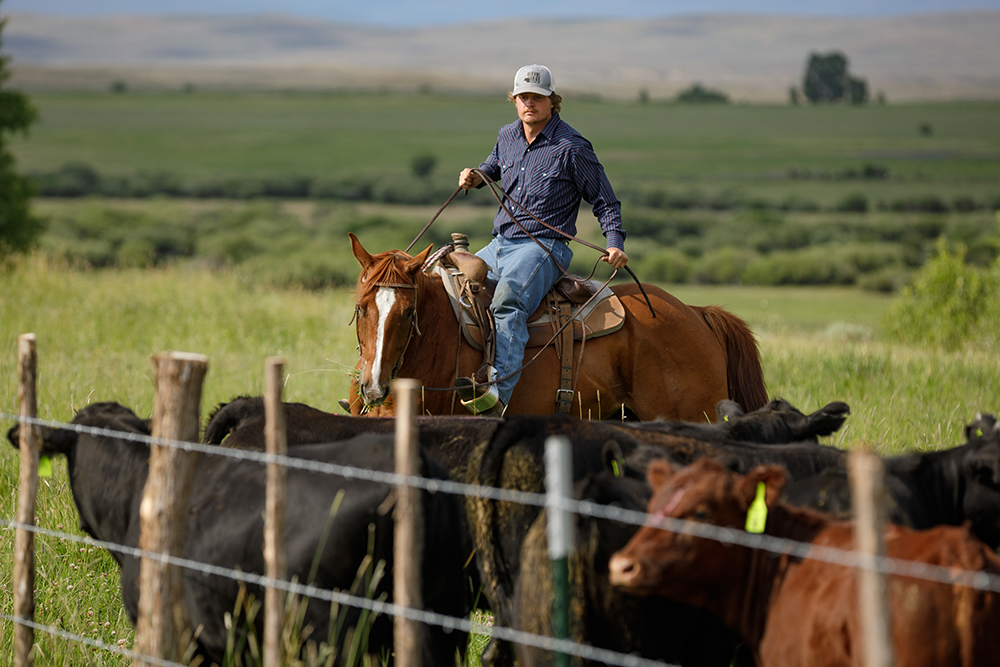
Minden, with help from a former Bear Hug graduate, Tyler Holton, runs a custom grazing or contract care program each grazing season. Though Minden doesn’t own the cattle, he gets paid to feed and care for them through the summer.
“We come up with a grazing plan, we put mineral out, we doctor them, we keep them alive, we keep them gaining weight,” says Minden. “And then, come fall, they send some trucks up to get them.”
It’s Minden’s way to keep Bear Hug solvent, and a learning opportunity for their interns. The grazing season in Wilsall is typically June through October. Bear Hug’s class runs through part of that window — June through August.
Holton, who also developed his interest in ranching through horsemanship and riding, was an intern at Bear Hug in the summer of 2024. Now, he helps with the contract grazing operation and leads the day-to-day activities for the interns and offers guidance when needed.
“Our internship is 10 weeks, starting June 1,” says Holton, who arrives a couple of weeks ahead of time to receive the cattle and prepare the horses. “We’ll show [the interns] around our pairs. We go to the other ranches for a month and a half, then get back at the beginning of August.”
The program balances introductory instruction and practice on Minden’s leased ranch with real-world experience at partner ranches. It’s a rigorous program intended to fast-track the right candidates to careers on ranches.
Over time, Minden and Holton have developed an ear for what makes a great Bear Hug candidate.
Veterans Make Good Cowboys
During a one-month window, Bear Hug receives more than 100 applications each year. Only four are accepted into the program annually.
Both men know that ranch work isn’t a good fit for everyone. They’re looking for the right mix of dedication and humility in candidates.
“The No. 1 thing is a serious drive to get into it as a profession,” says Minden. He’s looking for folks who already know they want to be a full-time cowboy or ranch hand and have taken steps to get involved before submitting their application to Bear Hug. For Minden, the right candidates will sometimes have an obvious tell.
“I’ll always get a guy who submits an application, then a day later, he sends an email to my personal email being like, ‘Did you get my application?’ A week later, it’s a phone call being like, ‘I’m just wondering when my interview is going to be.’ And then you get on the interview and we’ll ask, ‘Why are you wanting to do this?’ He’ll say, ‘Well, I saw my grandpa do it or I watched this movie, and I got really hooked on it. So I went and bothered a local horse trainer, and I’ve been mucking stalls for free. He’s let me ride a horse twice, and I’m obsessed with it and I want to do it,’” says Minden.
Candidates who can demonstrate they’ve already invested themselves in a piece of the industry have a good start in Minden’s heart. Beyond taking initiative, he says there are skills that commonly overlap between good soldiers and good cowboys: honesty, integrity, character and loyalty.
“You have to be the kind of person that when you do decide you really want something, you’re just going to put your head down and go get it. And your ego is not going to get in the way, and pride’s not going to get in the way,” says Holton. “A lot of people coming out of the military do have that.”
On the other side of the equation, Minden and Holton both appreciate what makes ranch work a good fit for veterans.
“The No. 1 thing [veterans] need when they get out is a sense of purpose. And ranching gives you that in a serious way,” says Minden. He gives an example of an inconveniently timed sick calf that just can’t wait for intervention. He likens that level of responsibility to his experience in the military and caring for fellow soldiers.
Both Minden and Holton are clear about one thing: It’s not a typical 9-to-5 job. But neither is the military. They’re looking for veterans who want a second career, not a retirement gig.
Ten Weeks On The Range
Johnathan Welborn is one of those veterans who was looking for a second go at a fulfilling profession. Welborn graduated from Bear Hug in 2023 and later landed a job at a ranch in northeastern Colorado.
He was introduced to horses through a relationship he built with a local horse owner near where he was stationed at Fort Bragg in North Carolina. His interest grew enough that when it came time to leave the military, Welborn pursued a spot at Bear Hug’s program.
Welborn recalls his first day at Bear Hug. “I remember showing up, and I was so excited. I remember meeting all the other guys, and it was kind of overwhelming.”
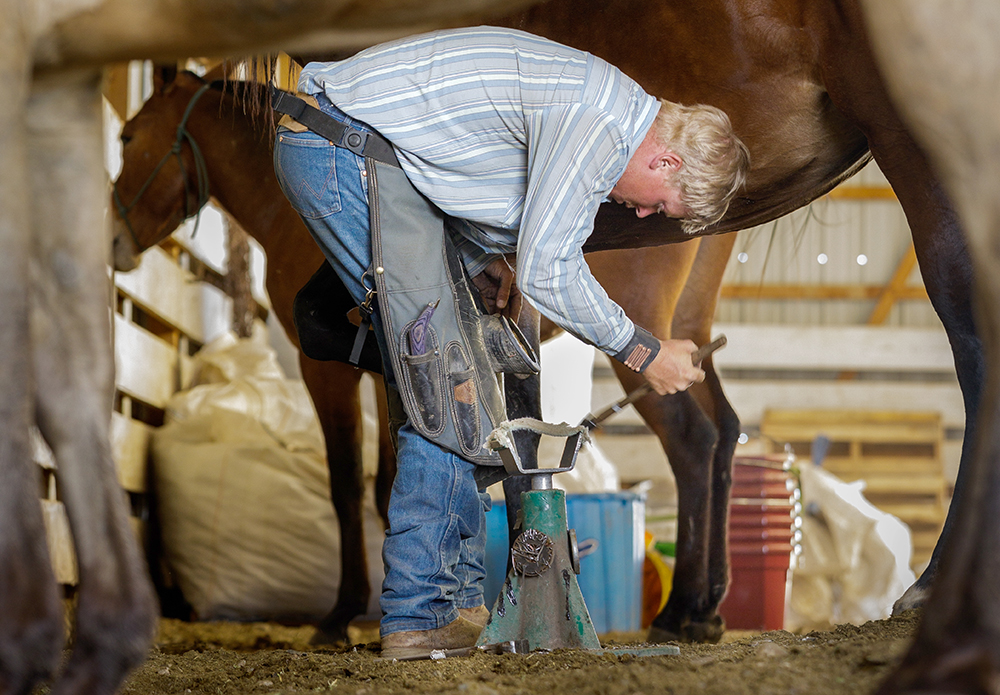
Minden and Holton have a front-row seat to the full roller coaster of emotions on display throughout the 10-week program. The first few days are heavy on basics — demonstrations on how to groom and saddle a horse, exposure to cattle and their calves, and the basics of husbandry for both species.
“We do a lot of horsemanship in a round pen,” Minden says, explaining the program’s flow. “From there, we transition to riding around outside. Then, depending on how quickly the group collectively picks it up, we go to a neighboring ranch during the second week. We ride around out there and help with the work.” At the end of the second week, the group starts their tour of partner ranches.
Through connections, Minden lines up six to eight ranches to take his group. They move between central Montana and Northern Colorado, where Minden can expose his interns to different ways of doing things and varied terrain.
“The first ranch we go to every year was started and founded by two veterans who had no experience in ranching and now run a very successful ranch,” says Minden. He’s referring to Little Belt Cattle Company, operated by Tim Sheehy and Greg Putnam, two former Navy SEALs.
“They are very understanding of [our interns’] journey. They can remember what it was like to not know how to do this stuff,” says Minden. Other ranchers and cowboys are sympathetic to the novice interns in Minden’s program, but often those folks have been in a saddle since before they can remember.
After a couple of weeks on partner ranches, the interns develop more certainty in their work. Sometimes, a bit too much.
“They’re like, ‘Oh, I’m kind of good at this. I can do this stuff that I was struggling with a couple weeks ago,’” says Minden. “Then they’ll go off a cliff because they’ll try something or they’ll be around someone who is actually good at it, and it will set them back. They’ll slowly creep out of that pit of despair again, typically by week six, when they are legitimately getting better at it.”
Welborn’s experience mirrors what Minden describes. He recalls feeling nervous about roping cattle, especially on a ranch in Wyoming known for its “old school” methods.
“I was pretty nervous about roping for the first time, especially at the ID Ranch’s branding,” recalls Welborn after hearing Minden share the ranch’s story and the crew’s experience as ropers and cowboys. “All I was thinking was, ‘Man, I don’t want to mess up and cause a wreck roping some calf at the branding.’”
Every intern was partnered with a more experienced cowboy or rancher on the day of the branding. Welborn recalls how reassuring it felt to be guided through the process. “It wasn’t like you’re just getting yelled at and everything feels like it’s going wrong. There was a lot of great mentorship and coaching that really blew me away,” says Welborn.
It’s an experience and a lesson Welborn has carried with him. And even three years after leaving Bear Hug, Welborn stays in contact with Minden.
“Johnathan actually just texted me the other day,” Minden said. “I’ll just read what it said:
‘We had some bouts of pink eye for the last month or so. Since early February, I’ve doctored close to 40 yearlings, all roped, all done solo.
‘This last week I doctored 19. I even got a double-blind pink eye loaded onto the trailer, pulling it on with a rope. I probably wouldn’t be doing any of that if it weren’t for Bear Hug and the foundation that was built there.
‘All that to say, thanks for giving me the opportunity. I’ve continued learning since. And thank God for using Bear Hug to get to open those doors to help me to where I am today.’”
That’s the hallmark of success for Minden’s program: a graduate who’s stuck with it and has found success and joy in the industry.
Bear Hug Cattle Company steps into a veteran’s life at a pivotal moment. Most applicants come to the program within a year of discharge. There aren’t enough programs like Bear Hug available to veterans.
Both Holton and Welborn say ranching fulfills their need for purpose. The two men look back on their experience with gratitude. At a time when they weren’t sure what their next chapter would look like, Bear Hug showed them a direction and gave them a start.
“In ranching, you get a second family right away,” says Minden. “You’re around good people; you get to make relationships right away that are going to be lifelong friends and mentors. It doesn’t really feel like you’re leaving behind all the things you like — community, purpose and strong values.”
Laura Brenner
Laura Brenner, Sr. Content Writer
Laura Brenner is a senior content writer for Noble Research Institute. She’s worked in agricultural communications for over a decade, specializing in nonprofit communications and storytelling. Laura earned a bachelor’s degree from Penn State University and a master’s degree from Purdue University. She resides near her hometown of Lancaster County in south-central Pennsylvania.
Comment